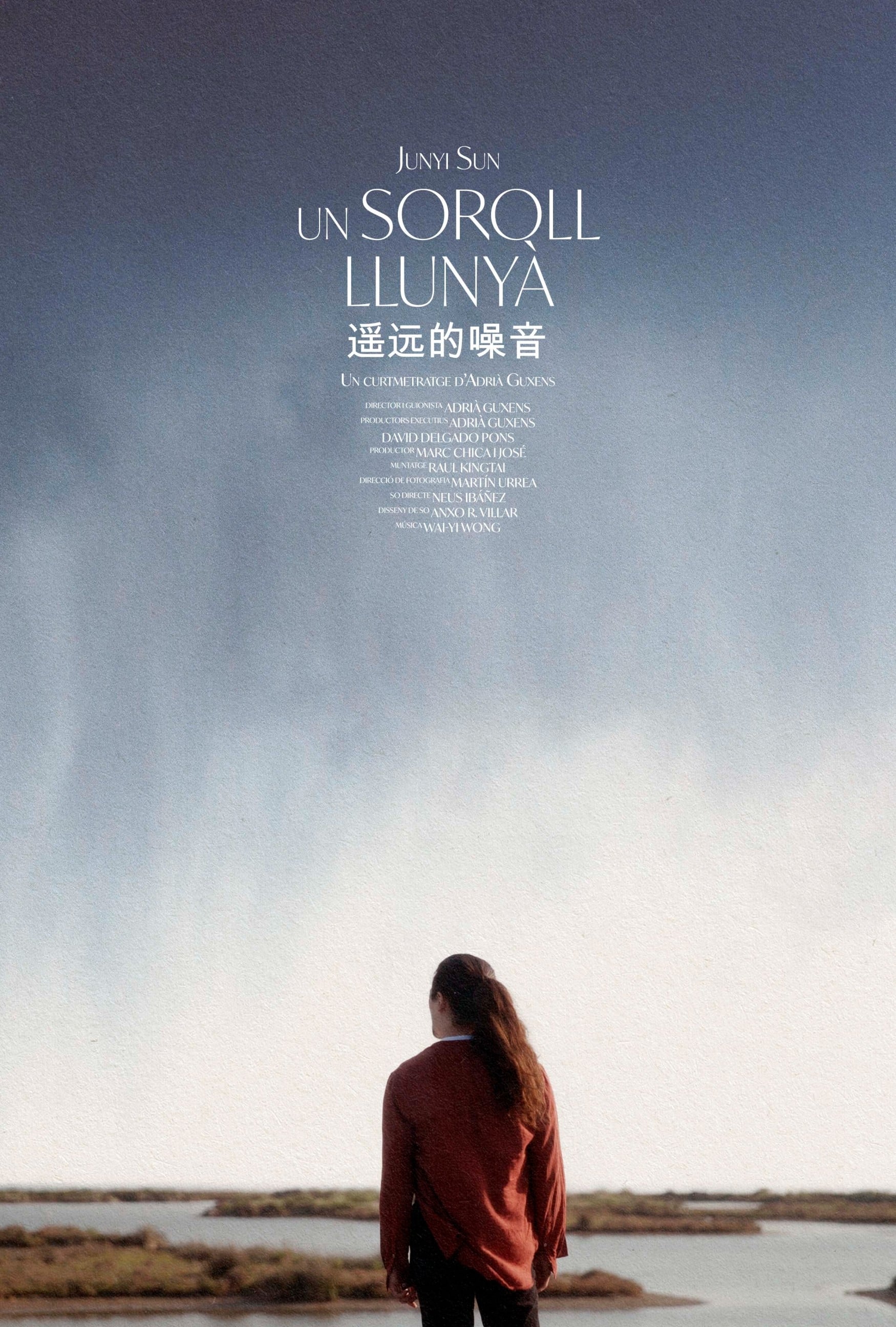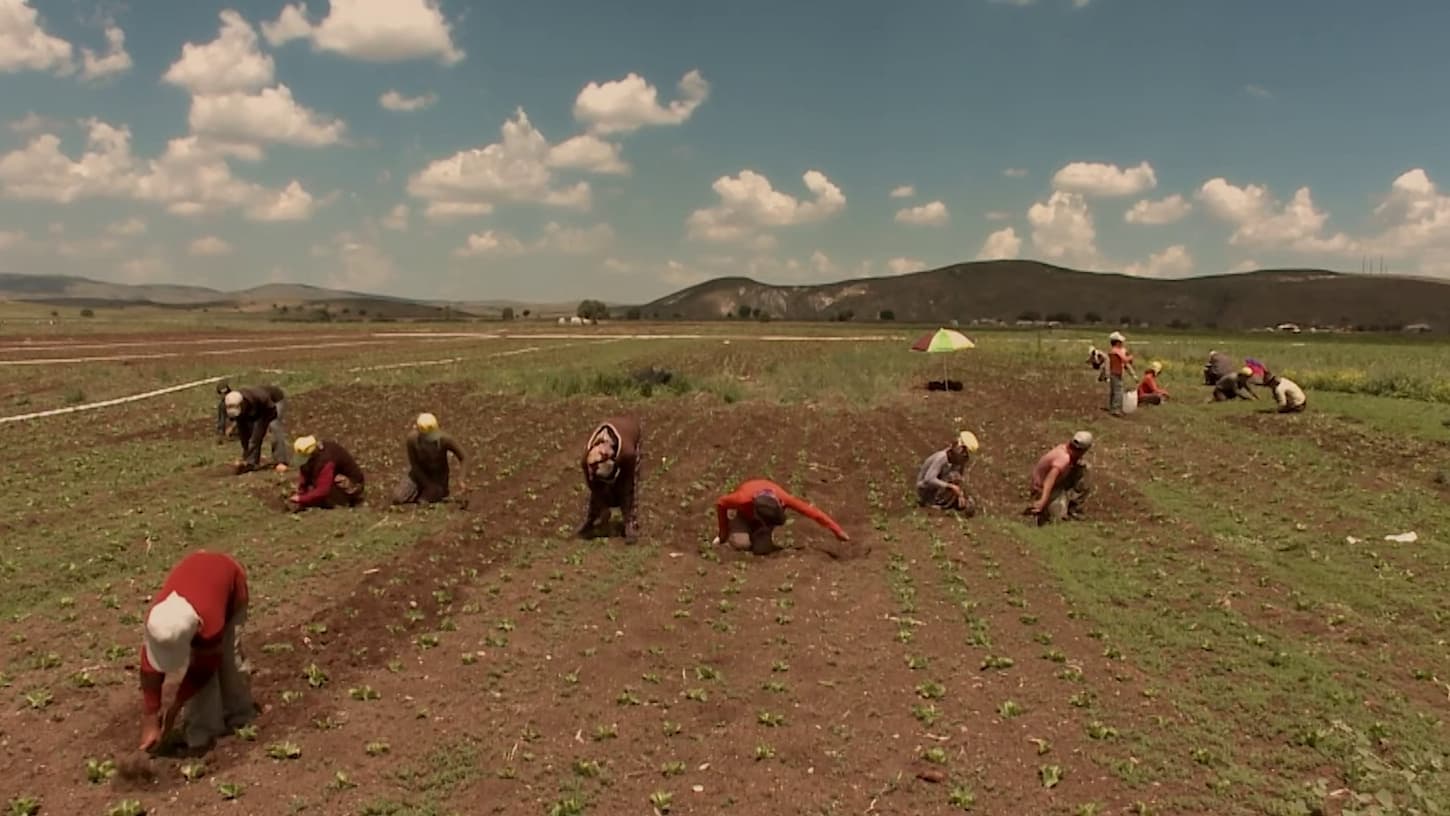
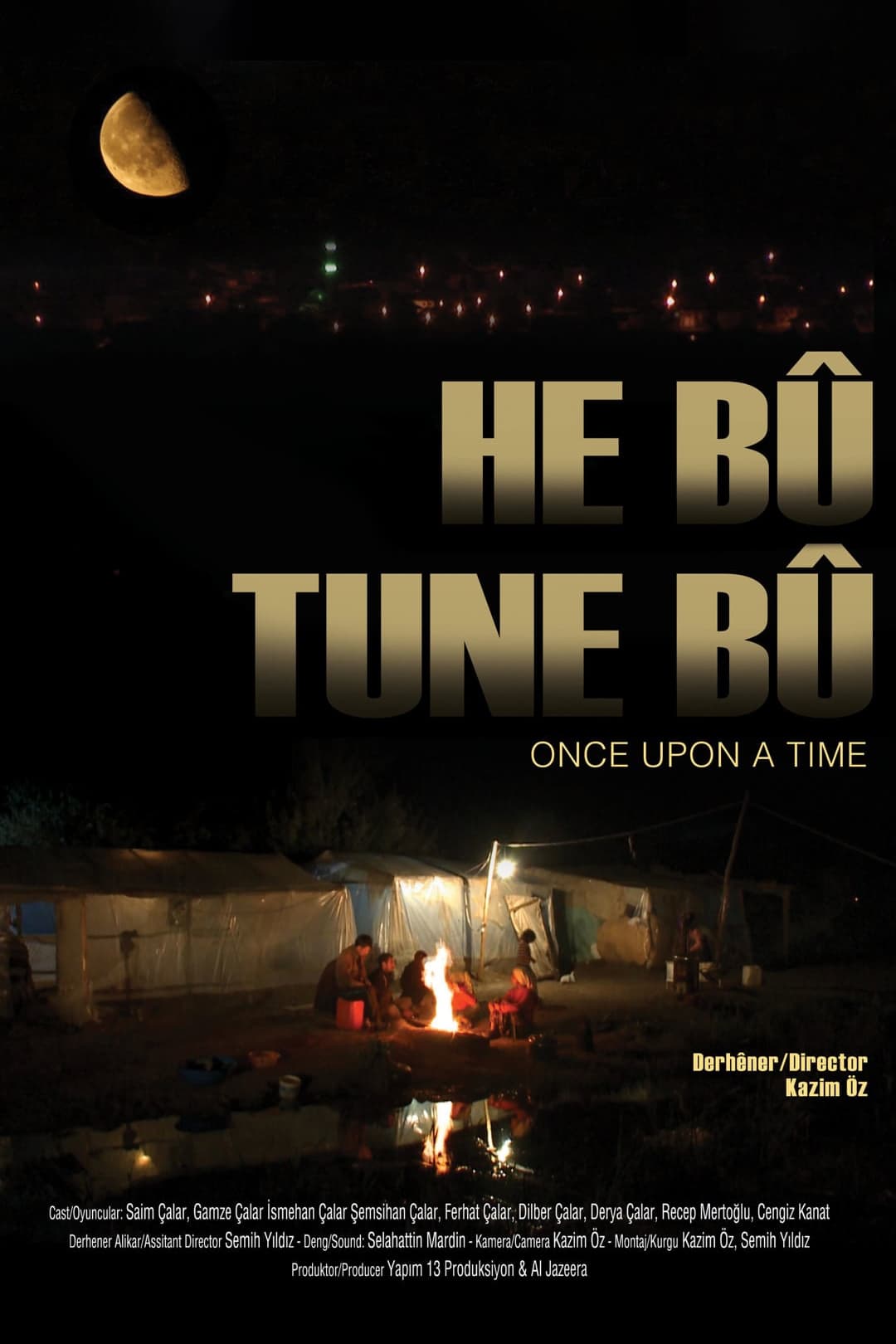
Every year, a Kurdish family leaves Gaziantep (Anatolia) to work on the land near Ankara. This thankless life of seasonal labor turns upside down when the eldest son falls in love.
Social & External
Sepp Holzer explains some of the innovative, labour-saving agricultural techniques he applies at his farm in the Eastern Alps of Salzburg, Austria.
From the Sahara to Mellila, witnesses talk about how they narrowly escaped death, unlike their companions - all migrants who were literally and symbolically swallowed up by the frontier.
This Emmy award-winning documentary chronicles a vanishing piece of Americana: the last remaining agricultural encampment fair in the country, and the families who spend months preparing for this unique rural phenomenon.
A partnership between the Government of Mali and an American agricultural investor may see 200-square kilometers of Malian land transformed into a large-scale sugar cane plantation. Land Rush documents the hopes, fears, wishes, and demands of small-scale subsistence farmers in the region who look to benefit, or lose out, from the deal.
The personal story of a young woman in her early 20's who escapes societies expectations and becomes a sheepherder for a summer season.
A documentary about migrants in the Netherlands, living, working, and dreaming of home.
This documentary from Min Sook Lee follows a poverty-stricken father from Central Mexico, along with several of his countrymen, as they make their annual migration to southern Ontario to pick tomatoes. For 8 months a year, the town's population absorbs 4,000 migrant workers who toil under conditions, and for wages, that no local would accept. Yet despite a fear of repercussions, the workers voice their desire for dignity and respect.
With great bawdiness and backbone, a rugby team made up of farmers strive to redeem themselves from a long run of bitter losses. In the face of the hefty demands of farming and fatherhood, the Saturday game becomes the focus of the men’s passions and the ground on which their worth is proved. ‘The Ground We Won’ is a highly authentic, slice of life film about the challenges and joys of manhood, as seen through the rites and rituals of a rural New Zealand rugby club.
Nancy Prebilich and her sister live with their parents on a farm that has been in their family for five generations. With the unexpected death of both parents, the sisters are left to keep this dying farm out of foreclosure amidst the many perils faced by America’s farmers.
Every season, tens of thousands of migrant farmworkers converge on small communities like Immokalee, Florida where they plant and harvest the food that Americans consume. A vast majority of these workers are undocumented, leaving them at the mercy of the large agribusinesses who hire them, the crew leaders who contract them and the landlords and businesses that profit from the seasonal arrival of migrant workers. Their "undocumented" legal status allows for a system of exploitation that leaves workers and their families to endure conditions and wages that rarely meet international human rights standards. Immokalee U.S.A. documents these daily experiences, leading the viewer to examine their own role in the issues migrant workers face in the U.S.A.
A cinematic portrait of farmer and writer Wendell Berry. Through his eyes, we see both the changing landscapes of rural America in the era of industrial agriculture and the redemptive beauty in taking the unworn path.
Soft boys by day, kings by night. The film follows a group of young Bulgarian Roma who come to Vienna looking for freedom and a quick buck. They sell their bodies as if that's all they had. What comforts them, so far from home, is the feeling of being together. But the nights are long and unpredictable.
A contemplative look at the achievements of large-scale farming practices on the Dutch Flevo polder, guided by Virgil's didactic poem Georgica.
This documentary short is a visual portrait of “Prairie Sentinels,” the vertical grain elevators that once dotted the Canadian Prairies. Surveying an old diesel elevator’s day-to-day operations, this film is a simple, honest vignette on the distinctive wooden structures that would eventually become a symbol of the Prairie provinces.
This 2015 documentary about the history behind the Sabinal Canyon in Texas. The story starts in the Hill Country where Cap. William Ware was given land for his years of service and after moving there started Waresville. After his death the town was moved about half a mile north and was called Montana but after a man was healed by swimming in the Sabinal river for a year the town was renamed Utopia. The movie also talks about town of Vanderpool as well as the Lost Maples state park.
Sangwoodgoon was founded in the Anti-High Speed Rail Movement and Tsoi Yuen Village Movement in 2009. In 2012, Sangwoodgoon tries cultivating rice for the second time. This film records the rice planting process in spring and Dragon Boat Festival. Not only did the director experience the unpredictable nature of weather, questions for his companion are raised at the same time: How is the life as a farmer in Hong Kong when there is shortage of land and labour? Apart from documenting the non-traditional rice cultivating techniques, the film also wants to discuss about the relationship between farmer and nature, and the changing state of mind of protestors all the way through.
Venture out to the Masumoto Farm – eighty acres of prime, peach-growing orchards – where seven varieties of the sweet juicy fruit are cultivated to sun-kissed perfection by a dynamic father-and-daughter team of David “Mas” and Nikiko Masumoto. Director Jim Choi succinctly captures this underrepresented facet of the CA farming industry about an Asian American family-run business, three generations strong, which in turn presents us with the changing idea of the American Dream. - See more at: http://laapff.festpro.com/films/detail/changing_season_2015#sthash.54OdJcdi.dpuf
Shot in Southern England over the course of six weeks by a crew of three American filmmakers, CircleSpeak offers a nuanced look at the passions and beliefs of the people immersed in the crop circle phenomenon during the season of 2001. This feature-length documentary presents interviews with serious “researchers”, self-proclaimed “hoaxers”, local farmers and villagers who are all, in one way or another, involved in this strange and compelling summer spectacle taking place year after year.
Within the last half century, our agriculture and food has changed more than it has changed before in several thousand years. New technologies and scientific ingenuity have given rise to genetically modified organisms (GMO) and other novel foods. Some people have raised concerns about the safety of GMOs in our food supply, given their incredible dominance in the majority of our diet. Traditional, organic farmers, have consistently been under attack by large corporate farming interests, who seek to dominate the food industry and run family farms out of business. This film looks at our current food system as well as a variety of smaller, organic options available to consumers who want to support sustainable farming methods.
Taleb, who came to a refugee camp at the age of five in 1975 and returned there after his studies abroad, tells of his life as a displaced person, his gratitude for the reception and support in Algeria, and his hope that the Sahrawis may one day return to their homeland. For Taleb, this hope drives him to actively prepare for better times: as a graduate in agricultural sciences, he conceived a successful small-scale closed-loop economy in a desert under the most difficult conditions, producing enough food for self-sufficiency.
A depiction of the Wrangelkiez neighbourhood in Berlin. The people portrayed tell their life stories. One woman came to the neighbourhood a decade ago to work in Berlin’s still unfinished Brandenburger Airport, one man reminisces his childhood on a Tobacco farm in Kentucky, another speaks of an exceptional day in an otherwise monotonous workplace. These portraits are interwoven with the story of Elpi, a Greek woman who is waiting for the long overdue visit of an old important friend. The outcome of this mixture is a film which captures the lives and perspectives of some of Wrangelkiez’s most commanding citizens, while at the same time evoking the loss that change and time passing means for places and for people.
A presentation of a case for a needed transition out of the current socioeconomic monetary paradigm which governs the entire world society. This subject matter will transcend the issues of cultural relativism and traditional ideology and move to relate the core, empirical 'life ground' attributes of human and social survival, extrapolating those immutable natural laws into a new sustainable social paradigm called a 'Resource-Based Economy'.
In 1999, Internet entrepreneur Josh Harris recruits dozens of young men and women who agree to live in underground apartments for weeks at a time while their every movement is broadcast online. Soon, Harris and his girlfriend embark on their own subterranean adventure, with cameras streaming live footage of their meals, arguments, bedroom activities, and bathroom habits. This documentary explores the role of technology in our lives, as it charts the fragile nature of dot-com economy.
Going beyond the occasional news clip from Burma, the acclaimed filmmaker, Anders Østergaard, brings us close to the video journalists who deliver the footage. Though risking torture and life in jail, courageous young citizens of Burma live the essence of journalism as they insist on keeping up the flow of news from their closed country.

A filmmaker is granted unprecedented access to a political candidate and his family as he runs for President.
A close-up portrait of the daily lives of a pair of cows: told by way of some narrative-free, intimate POV photography, with plenty of close shot images, we follow the daily routine of these animals as they live what can only be described as mundane, boring lives - all with an ultimate purpose within the human food chain.
Filmmaker Christopher Quinn observes the ordeal of three Sudanese refugees -- Jon Bul Dau, Daniel Abul Pach and Panther Bior -- as they try to come to terms with the horrors they experienced in their homeland, while adjusting to their new lives in the United States.
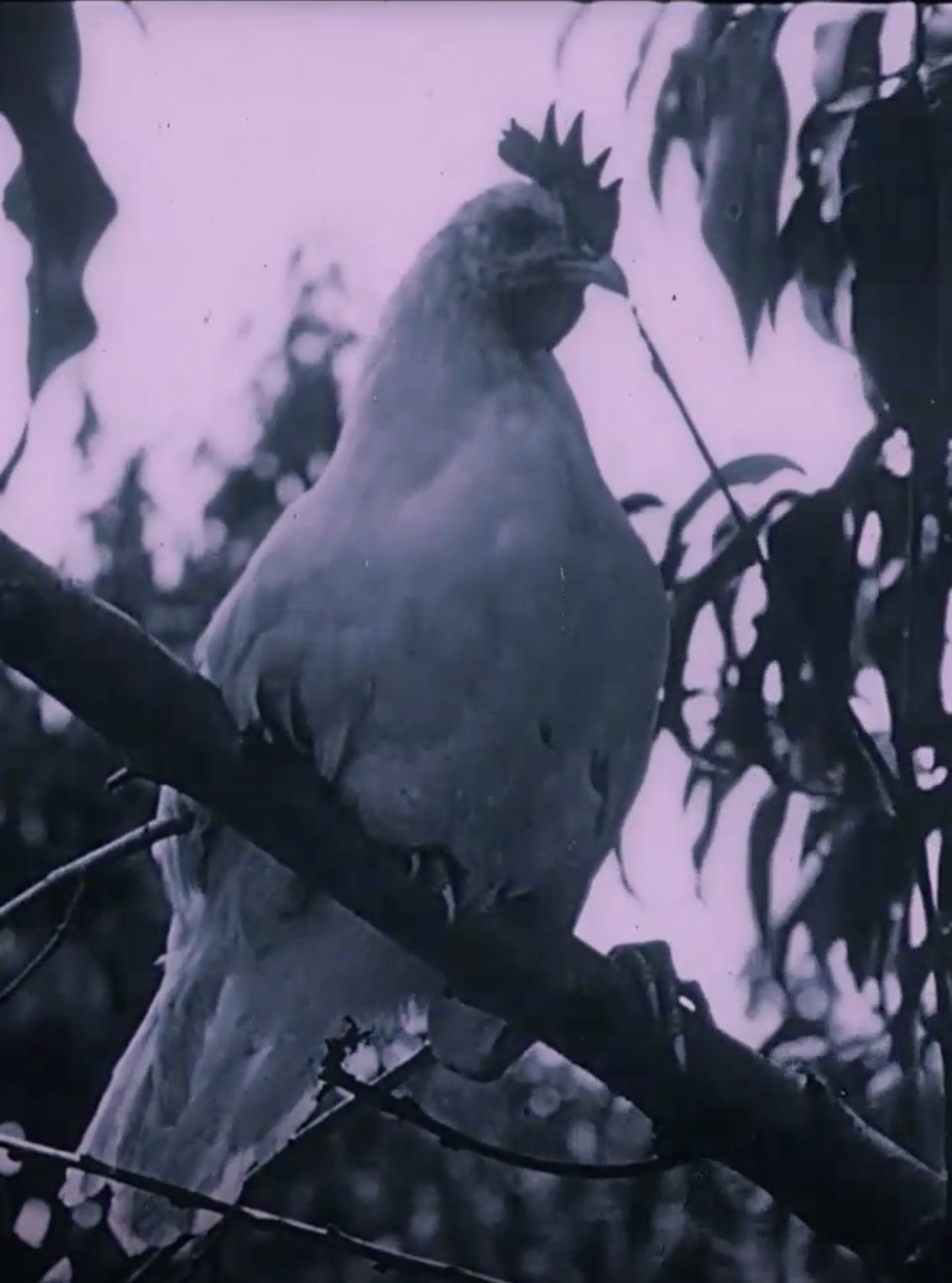
A glimpse into the raw and simple power of nature through encounters with farm animals: the eponymous Gunda, a mother pig; two cows, and a one-legged chicken.
More than 65 million people around the world have been forced from their homes to escape famine, climate change and war, the greatest displacement since World War II. Filmmaker Ai Weiwei examines the staggering scale of the refugee crisis and its profoundly personal human impact. Over the course of one year in 23 countries, Weiwei follows a chain of urgent human stories that stretch across the globe, including Afghanistan, France, Greece, Germany and Iraq.
This real-life look at FBI counterterrorism operations features access to both sides of a sting: the government informant and the radicalized target.
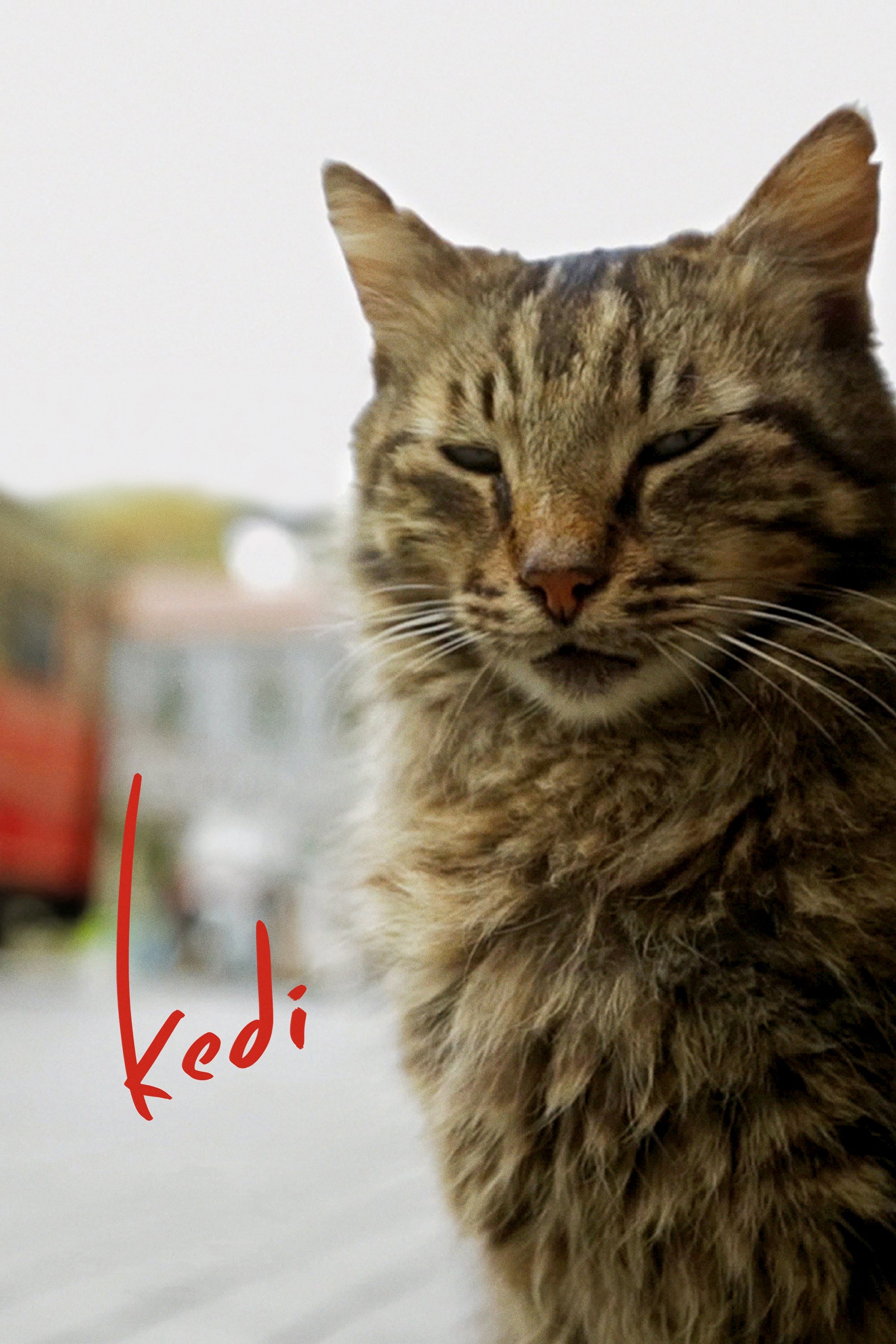
A profile of Istanbul and its unique people, seen through the eyes of the most mysterious and beloved animal humans have ever known, the Cat.
In August, 2014, a video of the public execution of American photojournalist James Foley rippled across the globe. Foley wore an orange jumpsuit as he knelt beside an ISIS militant dressed in black. That image challenged the world to deal with a new face of terror. And it tested one American family. Seen through the lens of filmmaker Brian Oakes, Foley’s close childhood friend, Jim takes us from small-town New England to the adrenaline-fueled front lines of Libya and Syria, where Foley pushed the limits of danger to report on the plight of civilians impacted by war.
A real-life undercover thriller about two ordinary men who embark on an outrageously dangerous ten-year mission to penetrate the world's most secretive and brutal dictatorship: North Korea.
The successes and failures of a couple determined to live in harmony with nature on a farm outside of Los Angeles are lovingly chronicled by filmmaking farmer John Chester, in this inspiring documentary.
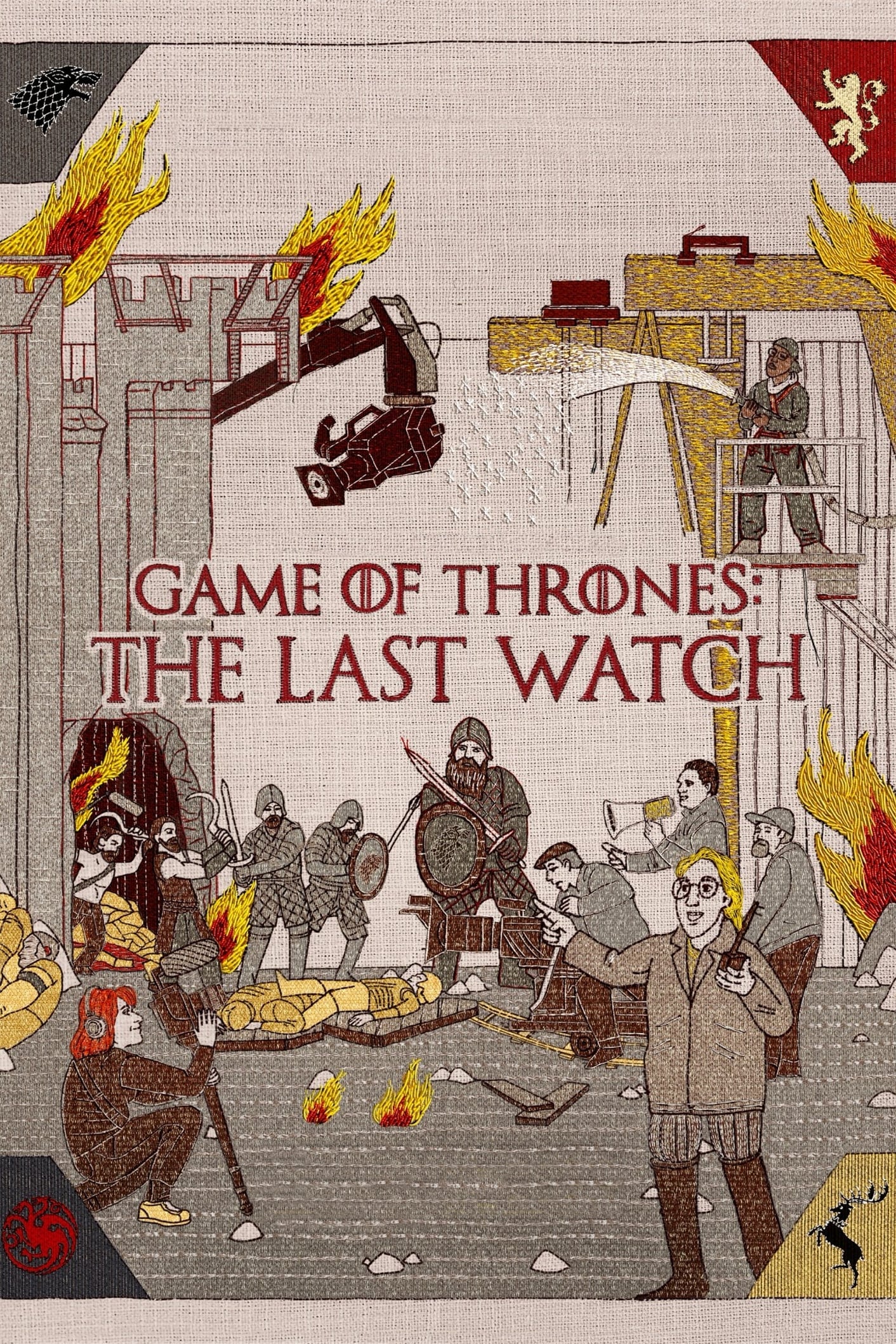
For a year, acclaimed British filmmaker Jeanie Finlay was embedded on the set of the hit HBO series “Game of Thrones,” chronicling the creation of the show’s most ambitious and complicated season. Debuting one week after the series 8 finale, GAME OF THRONES: THE LAST WATCH delves deep into the mud and blood to reveal the tears and triumphs involved in the challenge of bringing the fantasy world of Westeros to life in the very real studios, fields and car-parks of Northern Ireland. Made with unprecedented access, GAME OF THRONES: THE LAST WATCH is an up-close and personal portrait from the trenches of production, following the crew and the cast as they contend with extreme weather, punishing deadlines and an ever-excited fandom hungry for spoilers. Much more than a “making of” documentary, this is a funny, heartbreaking story, told with wit and intimacy, about the bittersweet pleasures of what it means to create a world – and then have to say goodbye to it.
Dubbed “The Cannibal Cop,” former NYPD officer Gilberto Valle was charged with conspiring to kidnap and eat women but argued it was all a fantasy. His story made headlines both for its disturbing details and its potential to kick off a trend of thought-policing across the nation. Featuring intimate interviews with Valle and insights from experts, Thought Crimes explores if someone can be found guilty for their most dangerous thoughts.
If you ever find yourself traveling down Interstate 49 through Missouri, try not to blink—you may miss Rich Hill, population 1,396. Rich Hill is easy to overlook, but its inhabitants are as woven into the fabric of America as those living in any small town in the country. This movie intimately chronicles the turbulent lives of three boys living in said Midwestern town and the fragile family bonds that sustain them.
This documentary by Joe Berlinger and Bruce Sinofsky details the murder trial of Delbert Ward. Delbert was a member of a family of four elderly brothers, working as semi-literate farmers and living together in isolation from the rest of society until William's death.
Penetrating the insular world of New York's Hasidic community, focusing on three individuals driven to break away despite threats of retaliation.
A documentary on the expletive's origin, why it offends some people so deeply, and what can be gained from its use.