Experimental short film about car wreckage and automobile safety.
Social & External
The people behind it
"Le Défilé" is a short film of Regine Chopinot & Jean-Paul Gaultier's collaborations, from a retrospective exhibit by the same name.
Time-lapse photography of books, paintings, reflections, and light falling on textures, shot entirely through a glass ashtray. "'All that is is light.' – Dun Scotus Erigena. 'To see the world in a grain of sand.' – William Blake. These are the primary impulses while working on this film. It is dedicated to Jim Davis who showed me the first spark of refracted film light." - S.B.
An atmospheric essay, which is an alternative version of Count Dracula, a film directed by Jess Franco in 1970; a ghostly narration between fiction and reality.
Grand Opera marks a stock-taking of Benning's work and his life, presenting a personal and artistic autobiography woven together with a series of events dealing with the historical development of the number pi, Benning's travels, and homages to Michael Snow, Hollis Frampton, George Landow (Owen Land), and Yvonne Rainer.
Taking its title from the poem by Wallace Stevens, the film is composed of a series of attempts at looking and being looked at. Beginning as a city state commission under the name and attitude of “Unschool”, the film became a kaleidoscope of the experiences, questions and wonders of a couple of high school students after a year of experiences with filmmaker Ana Vaz questioning what cinema can be. Here, the camera becomes an instrument of inquiry, a pencil, a song.
A woman walks, loves, eats and washes herself, dances. It all takes place in a bedroom. At times flashbacks, or visualizations of previous or following scenes. Unless her life in the bedroom becomes an obsession, she lives through the other scenes.
Homeo is a mental construction made from visual reality, just as music is made from auditive reality. I put in this film no personal intentions. All my intentions are personal. I’ve made this film thinking of what the audience would have liked to see, not something specific that I wanted to say: what the film depicts is above all reality, not fiction. Homeo is, for me, the search for an autonomous cinematographic language, which doesn't owe anything to traditional narrative, or maybe everything. Cinema is, above all, part of a way of life which will become more and more self-assured in the years and century to come. We are part of this change, and that’s why I tried in Homeo to establish a series of perpetual changes, in constant evolution or regress, which tries, above all, to focus on things.
One of the very few films made by Etienne O'Leary, all of which emerged from the French underground circa 1968 and can be very loosely designated 'diary films.' Like the contemporaneous films by O'Leary's more famous friend Pierre Clementi, they trippily document the drug-drenched hedonism of that era's dandies. O'Leary worked with an intoxicating style that foregrounded rapid and even subliminal cutting, dense layering of superimposed images and a spontaneous notebook type shooting style. Yet even if much of O'Leary's material was initially 'diaristic,' depicting the friends, lovers, and places that he encountered in his private life, the metamorphoses it underwent during editing transformed it into a series of ambiguously fictionalized, sometimes darkly sexual fantasias. - Experimental Film Club
An experimental docu-fiction short from hours of collected material shot by the director. Different scenes, from drunk parties with friends to shots of the Dutch landscape during a train ride, are cut together to see if a narrative story can be constructed from nothing but randomly shot footage.
The Futurist is a condensed experience of film viewing, a single 360 degree animated shot in an empty 1920’s cinema where the sound becomes a cacophony of past projections and the aural experience is closer to that of the projectionist than the audience.
Over the course of more than fifteen years, Clémenti films a series of intimate diaries, starting from daily encounters. In La deuxième femme, we see Bulle Ogier and Viva, Nico and Tina Aumont, Philippe Garrel and Udo Kier, a performance by Béjart, a piece by Marc’O, concerts by Bob Marley and Patti Smith (not always recognisable)... It’s like a maelstrom of psychedelic images that are passed through a particle accelerator.
In Swole I continue to document my commitment to an intensive and transformative gym and diet regimen, as well as the communities that form around such activities, sustaining themselves through texting and sharing videos and photos on social media. I learn the vocabulary of my new community.
At a morgue, forensic pathologists conduct autopsies of the corpses assigned. "S. Brakhage, entering, WITH HIS CAMERA, one of the forbidden, terrific locations of our culture, the autopsy room. It is a place wherein, inversely, life is cherished, for it exists to affirm that no one of us may die without our knowing exactly why. All of us, in the person of the coroner, must see that, for ourselves, with our own eyes. It is a room full of appalling particular intimacies, the last ditch of individuation. Here our vague nightmare of mortality acquires the names and faces of OTHERS. This last is a process that requires a WITNESS; and what 'idea' may finally have inserted itself into the sensible world we can still scarcely guess, for the CAMERA would seem the perfect Eidetic Witness, staring with perfect compassion where we can scarcely bear to glance." – Hollis Frampton
André's Eyes is an experimental docudrama in which the actual family members themselves participate in the recreation of their own story. Set in a small village in the Portuguese countryside, the film follows the struggle of a divorced father to keep his family together after his youngest son is taken away from them and placed in a foster family.
A collage of Derek Jarman's super 8 footage spanning over 20 years.
The Vietnam War during the JFK years and beyond. Made in 1972 in the filmmaker's apartment, without documentary footage of the war, metaphors are created through the animation of images and objects, and through guerrilla skits. By rejecting the authority of traditional documentary footage, the anarchist spirit of individual responsibility is established. This is history from one person's point of view, rather than a definitive proclamation.
"A fisherman, dark-skinned and shirtless, sits in a boat on a quiet river and, before long, catches a fish. The fish gasps for air and the fisherman holds it to his chest until it dies. This sequence—performed by a series of fishermen, of various ages and using various styles of capture—is the spine of the work, interrupted by passages of quiet natural beauty; one shot is a steady, stately pan through scores of trees and empty air behind." - Vinson Cunningham
A non-narrative cine-essay that collaboratively explores the potentials for trans feminine representation in film.
This is a 1991 documentary film about the legendary artist and filmmaker, Joseph Cornell, who made those magnificent and strange collage boxes. He was also one of our great experimental filmmakers and once apparently made Salvador Dali extremely jealous at a screening of his masterpiece, Rose Hobart. In this film we get to hear people like Susan Sontag, Stan Brakhage, and Tony Curtis talk about their friendships with the artist. It turns out that Curtis was quite a collector and he seemed to have a very deep understanding of what Cornell was doing in his work.
Investigators reveal how Boeing’s alleged priority of profit over safety could have contributed to two catastrophic crashes within months of each other.
In an intimate and joyful story of love in the face of loss, celebrated poets Andrea Gibson and Megan Falley find strength—and unexpected hilarity—in what might be their final year together.
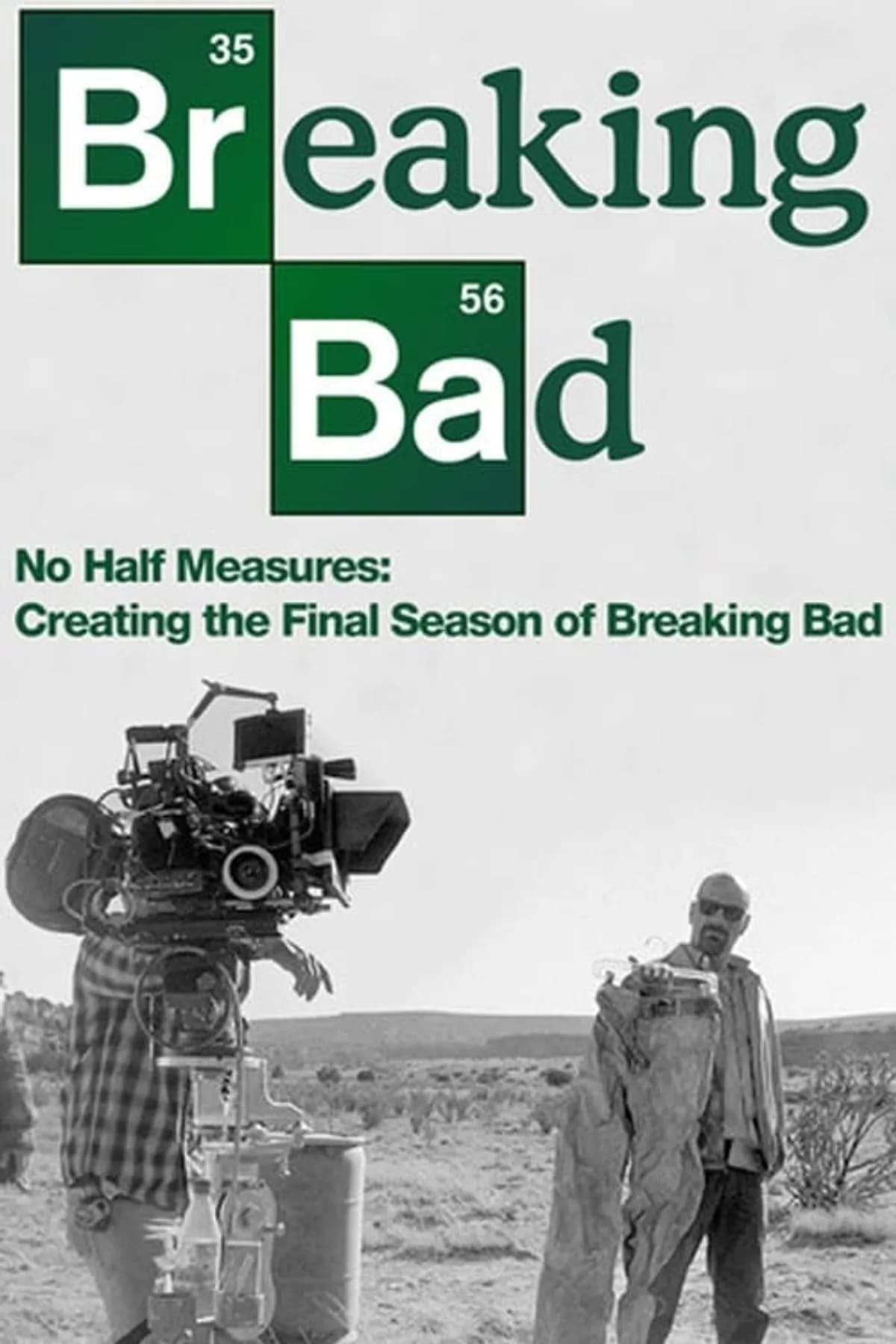
A documentary about the making of season five of the acclaimed AMC series Breaking Bad.
Daniel Craig candidly reflects on his 15 year adventure as James Bond. Including never-before-seen archival footage from Casino Royale to the upcoming 25th film No Time To Die, Craig shares his personal memories in conversation with 007 producers, Michael G Wilson and Barbara Broccoli.
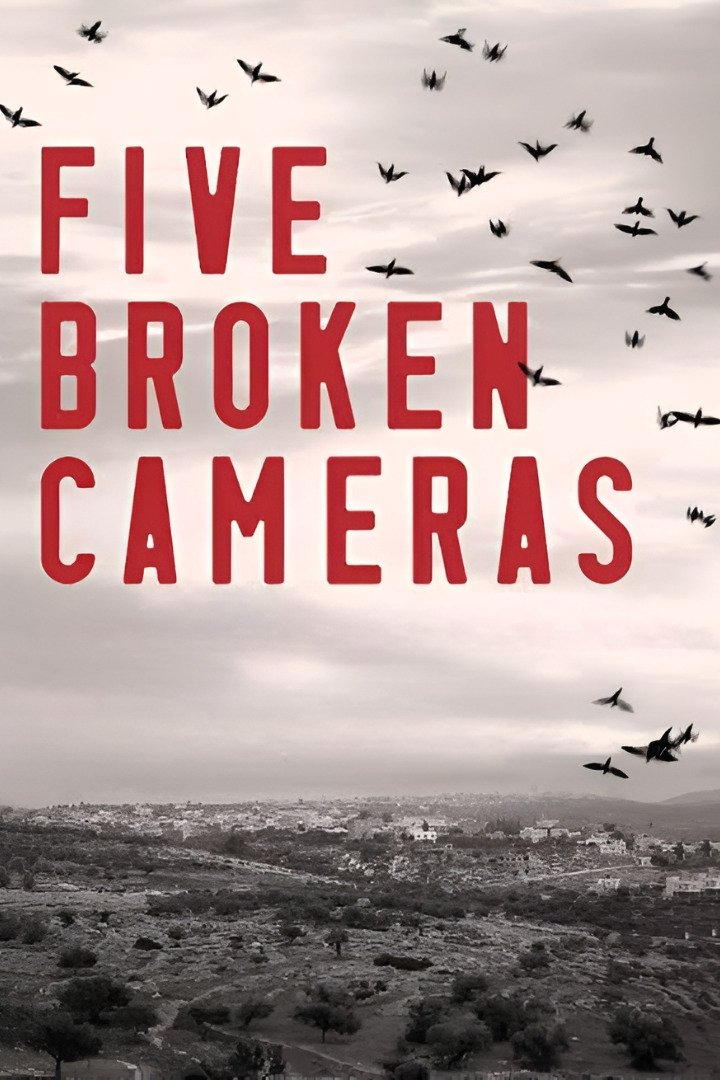
Five broken cameras – and each one has a powerful tale to tell. Embedded in the bullet-ridden remains of digital technology is the story of Emad Burnat, a farmer from the Palestinian village of Bil’in, which famously chose nonviolent resistance when the Israeli army encroached upon its land to make room for Jewish colonists. Emad buys his first camera in 2005 to document the birth of his fourth son, Gibreel. Over the course of the film, he becomes the peaceful archivist of an escalating struggle as olive trees are bulldozed, lives are lost, and a wall is built to segregate burgeoning Israeli settlements.
Those who knew iconic funnyman John Candy best share his story, in their own words, through never-before-seen archival footage, imagery, and interviews.
A teen slams her car into a building, killing her boyfriend and his friend. What seems like a tragic accident becomes a murder case.
THE SPIRIT MOLECULE weaves an account of Dr. Rick Strassman's groundbreaking DMT research through a multifaceted approach to this intriguing hallucinogen found in the human brain and hundreds of plants, including the sacred Amazonian brew, ayahuasca. Utilizing interviews with a variety of experts to explain their thoughts and experiences with DMT, and ayahuasca, within their respective fields, and discussions with Strassman’s research volunteers, brings to life the awesome effects of this compound, and introduces us to far-reaching theories regarding its role in human consciousness.
Amber Heard and Nicole Kidman discuss their characters Mera and Atlanna.
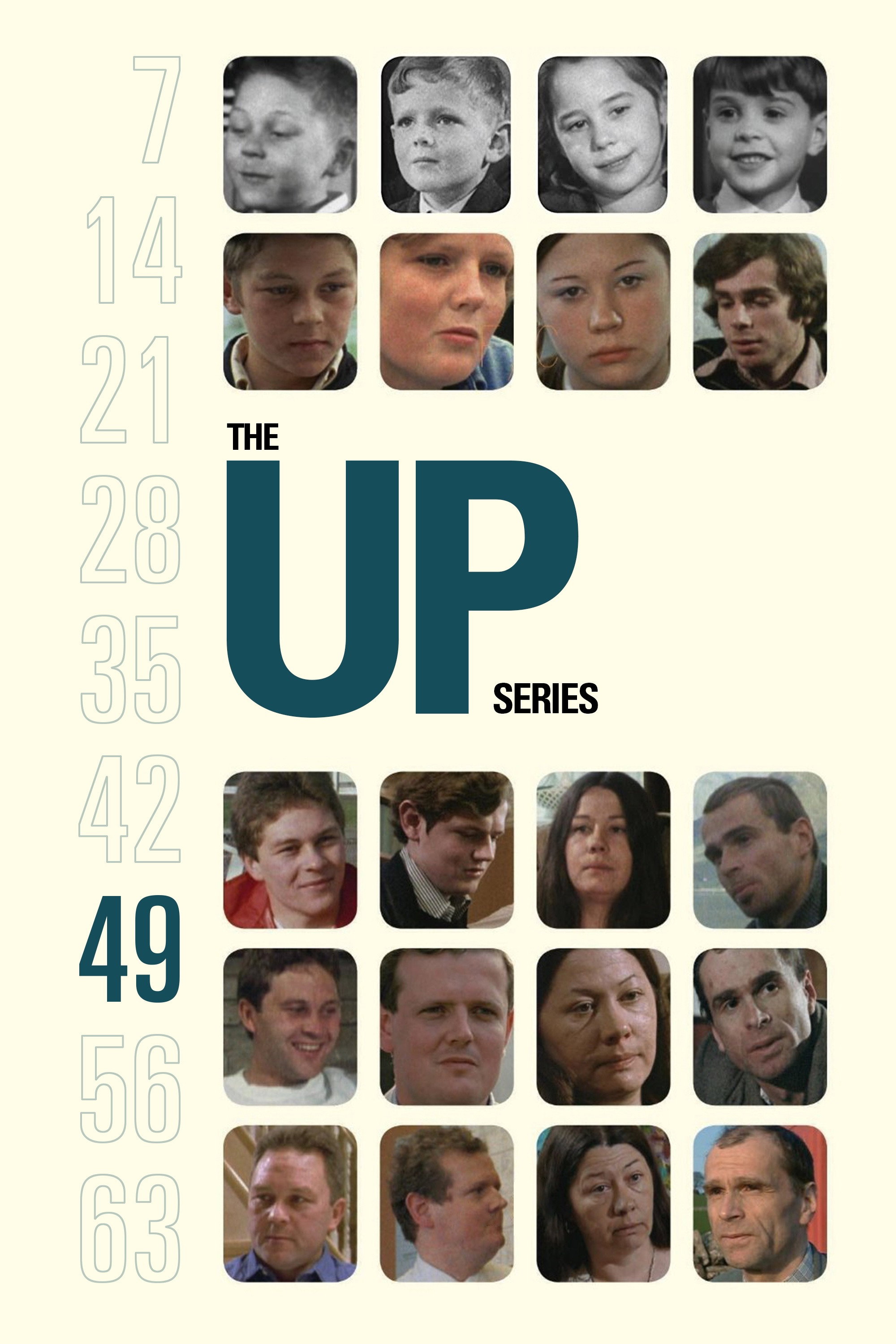
A group of British children aged 7 from widely ranging backgrounds are interviewed about a range of subjects. The filmmakers plan to re-interview them at 7 year intervals to track how their lives and attitudes change as they age.
Lupita Nyong'o narrates a documentary about Peanuts and its creator, Charles M. Schulz. Famous fans—including Drew Barrymore, Kevin Smith, and Al Roker—share its influence on them, and a new animated story finds Charlie Brown on a quest.
Police pull over a woman who claims she just gave birth. But the baby — and the blood — aren't hers. Twisted lies unravel in this true-crime documentary.
49 Up is the seventh film in a series of landmark documentaries that began 42 years ago when UK-based Granada's World in Action team, inspired by the Jesuit maxim "Give me the child until he is seven and I will give you the man," interviewed a diverse group of seven-year-old children from all over England, asking them about their lives and their dreams for the future. Michael Apted, a researcher for the original film, has returned to interview the "children" every seven years since, at ages 14, 21, 28, 35, 42 and now again at age 49.In this latest chapter, more life-changing decisions are revealed, more shocking announcements made and more of the original group take part than ever before, speaking out on a variety of subjects including love, marriage, career, class and prejudice.
Class Action Park explores the legend, legacy, and truth behind the 1980s water park in Vernon, New Jersey that long ago entered the realm of myth. Known for its dangerous, unsupervised rides and lack of regulation, guests of Action Park expected to walk away with injuries and were lucky if they made it out alive. Shirking the trappings of nostalgia, the film uses investigative journalism, original animations, recordings, and interviews with the people who lived it to reveal the true story of Action Park.
A journalist and a photographer set out to memorialize the bedrooms left behind by children killed in school shootings.
The incredible saga of the Chinese immigrant Sung family, owners of Abacus Federal Savings of Chinatown, New York. Accused of mortgage fraud by Manhattan District Attorney Cyrus R. Vance, Jr., Abacus becomes the only U.S. bank to face criminal charges in the wake of the 2008 financial crisis. The indictment and subsequent trial forces the Sung family to defend themselves – and their bank’s legacy in the Chinatown community – over the course of a five-year legal battle.
Explore the evolution of Buzz Lightyear from toy to human in the making of Pixar’s Lightyear. Dive into the origin and cultural impact of everyone’s favorite Space Ranger, the art of designing a new “human Buzz,” and the challenges faced by the Lightyear crew along the way.
An inside look at one of the most anticipated movie sequels ever with James Cameron and cast.
This revealing documentary honors the legendary Sidney Poitier—iconic actor, filmmaker, and civil rights activist. Featuring interviews with Denzel Washington, Spike Lee, Halle Berry, and more.
In 1997, Louis Theroux made a documentary about the world of male porn performers in Los Angeles. 15 years later, he returns to find a business struggling with the deluge of free porn on the internet. Louis revisits some of the original programme's contributors as well as meeting the latest crop of porn performers dreaming of porn stardom.