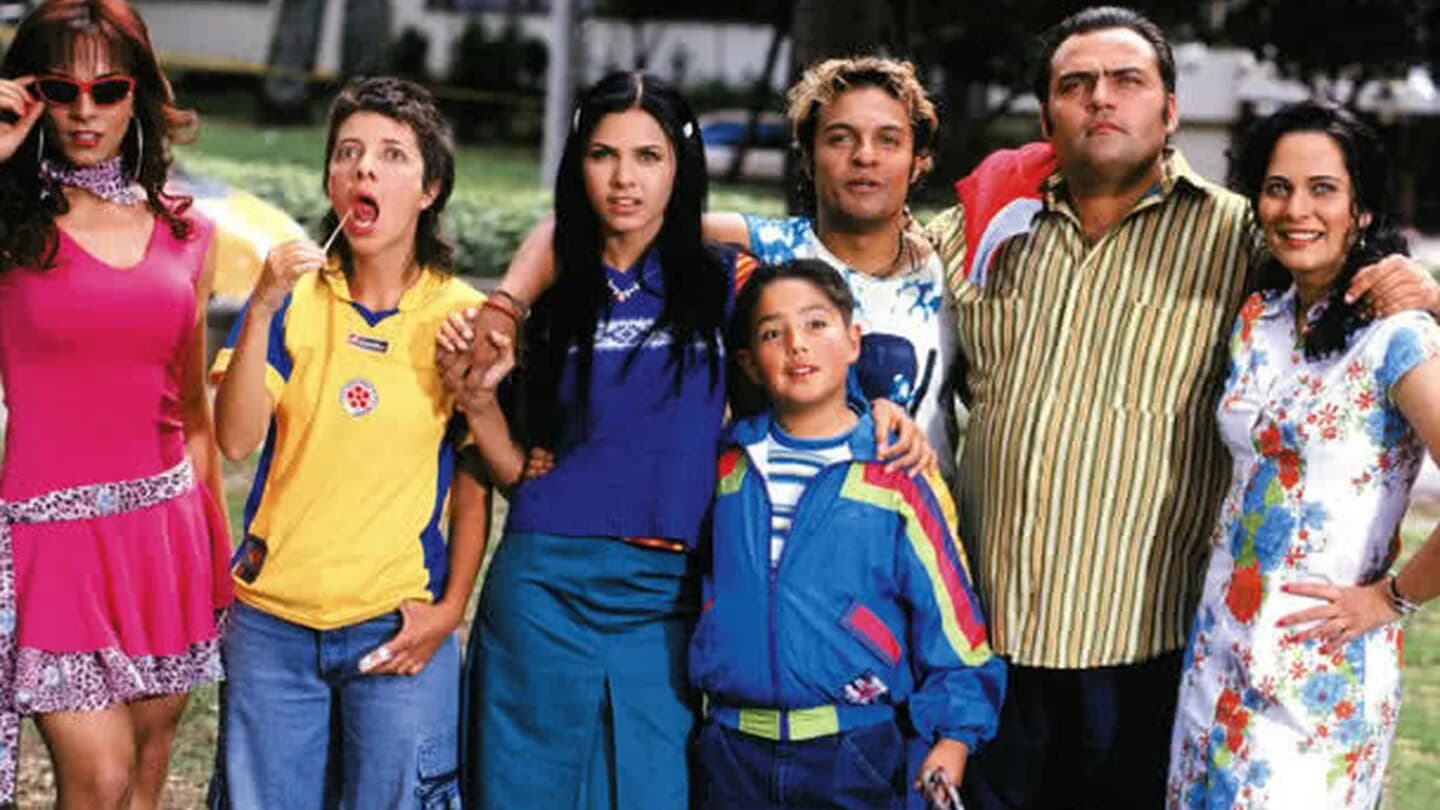

Los Reyes is a telenovela filmed in Colombia and produced by the Colombian network, RCN. It debuted in 2005 and is available via RCN cable TV in the United States.
Social & External
The people behind it
Cony Camelo
Hilda Edilberta Reyes
Enrique Carriazo
Edilberto Reyes
Jery Sandoval
María Del Carmen Reyes
Margarita Muñoz
Géraldine Zivic
Natalia Bernal/ Lulú (Perrita Argentina) (Sólo voz)
Diego Trujillo
Emilio Iriarte
Jacqueline Arenal
Mayoli "Yoli" González/ Ángela González de Reyes † (Flashback)
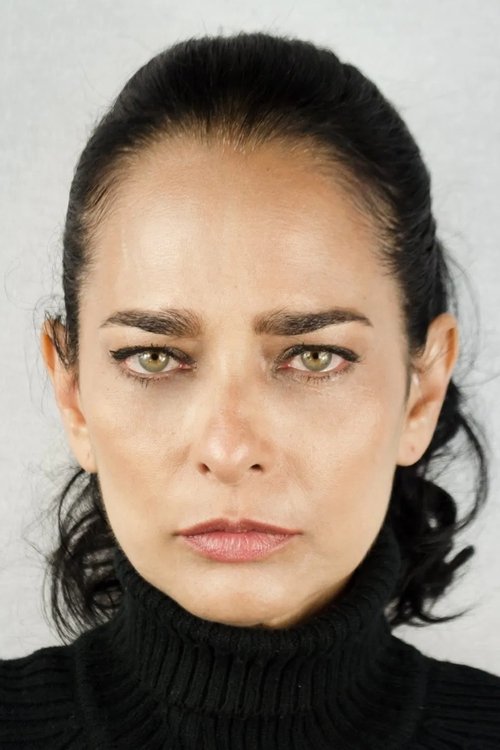
Nataly Umaña
Mónica
Ricardo Vélez
Armando Valenzuela
Daniel Arenas
Santiago "Santi" de Jesús Iriarte Vanegas

DKDA: Sueños de juventud is a Mexican youth telenovela produced by Luis de Llano Macedo for Televisa and originally broadcast on Canal de las Estrellas from November 22, 1999, to April 28, 2000. Created by Susan Crowley and adapted by Sergio Schmucler and Carmen Sepúlveda, the telenovela stars Jan, Litzy (later replaced by Andrea Torre), María Sorté, Otto Sirgo, and Eugenia Cauduro. The series was conceived around a fictional pop group and blends music with teen drama. The story follows Rodrigo Arias and Laura Martínez, two teenagers brought together by the successful pop group DKDA. As they pursue their musical dreams, they face romance, rivalries, family conflicts, jealousy, and personal challenges. Alongside their friends and bandmates, they learn about love, friendship, loyalty, and the responsibilities that come with fame while navigating the ups and downs of youth.
El amor no tiene precio is an American telenovela. It aired in 2005 until the series finale in 2006.
Preciosa is a sweet and pretty 18-year-old girl who has a problem with one of her legs. Her life takes place in the strange and fascinating world of the circus that she loves so much. His life is full of vivacity and tenderness, but also of drama and lack.
Amor de nadie is a Mexican telenovela produced by Carla Estrada for Televisa and originally broadcast on Canal de las Estrellas from September 10, 1990, to June 14, 1991. Created by Eric Vonn, with literary editing by Marcia del Río, the telenovela stars Lucía Méndez, Saúl Lisazo, Fernando Allende, and Bertín Osborne. It was Lucía Méndez's final telenovela as a leading actress for Televisa during this period. The story follows Sofía Hernández, a young woman from a humble mining town who dreams of leaving her difficult life behind. After suffering betrayal and hardship, she moves to Mexico City to pursue a career as a model. Along the way, she faces jealousy, ambition, family conflicts, and complicated relationships while searching for love and a better future.
Determined mother Mrs. Garcia strives to give daughters Valeria and Mar a better future, shielding them from poverty. She'll fight to see her dreams reflected in them and provide the highest standard of living.
"Peseli: Minis" is a captivating series of short cartoons that brings laughter and joy to viewers of all ages.
Sentimientos Ajenos is a Mexican telenovela produced by José Alberto Castro for Televisa and originally broadcast on Canal de las Estrellas from August 19, 1996, to January 3, 1997. It is based on the Chilean radio serial Dos mujeres y un hombre, created by Arturo Moya Grau and adapted for television by Lorena Salazar and Eduardo Quiroga. The story follows Sofía de la Huerta, a kind-hearted young painter who falls in love with Renato Aramendia, unaware that their relationship will awaken the jealousy and hatred of her own sister, Leonor. After a series of manipulations and betrayals tear her family apart, Sofía must fight to reclaim her life, protect her son, and find happiness while confronting the woman determined to destroy her.
Tenías que ser tú is a Mexican telenovela produced by Carlos Téllez for Televisa and originally broadcast on Canal de las Estrellas from November 23, 1992, to March 12, 1993. Created by Jorge Patiño and Gerardo Sánchez Luna, it was the last telenovela produced by Carlos Téllez. The story follows Gabriela Beltrán, whose life changes dramatically after the tragic death of her father leaves her family in poverty. As she and her family struggle to rebuild their lives, Gabriela falls in love with her childhood friend, Gorka Charachaga. Their romance is threatened by Santa, an ambitious young woman determined to separate them, leading to a story of love, sacrifice, and perseverance in the face of adversity.
Las Amazonas is a Mexican telenovela produced by Salvador Mejía Alejandre for Televisa and originally broadcast on Las Estrellas from May 16 to September 4, 2016. It is based on the Venezuelan telenovela Amazonas (1985). The story follows ranch owner Victoriano Santos and his three daughters, whose lives are transformed by love, family rivalries, and long-hidden secrets. As old betrayals resurface and unexpected romances develop, they must confront painful truths that will test their relationships, reshape their family, and change their future forever.
A dreamy seamstress and mother of three's life is turned upside down when she's wrongly diagnosed with a terminal disease along with an actually terminally ill wealthy book publisher.
This is the story of four women who live on the paradisiacal Isla de Margarita: Saioa Mujica, Elizabeth Zamora, Rebeca Ponti and Eloína Díaz. The four will be forced to face the issues of fidelity and love with their partners, navigating the difficult waters of self-interest and true feelings.
Mistreated by the Narváez family, the poor and innocent Maricruz is humiliated, abandoned, and imprisoned, losing everything. Upon discovering her true origins, she transforms into a wealthy and powerful woman. Driven by grief and the loss of her father, she vows revenge against everyone who made her suffer.
Based on the original version of same name created by Cris Morena, the series tells the story of a group of orphans living in a manor, known as Raio de Luz, struggling and being guided by a young woman, Carol, that assumes a maternal figure for them. Their experiences such as discovering first love, deceptions, loneliness and friendship, as well as adventures in fantasy, are depicted throughout the series. The narrative is followed by musical themes and videoclips.
El amor no es como lo pintan is a Mexican telenovela produced by Juan David Burns and Elisa Salinas for TV Azteca. It was broadcast on Azteca 13 from November 6, 2000 to April 27, 2001 for 165 episodes.
Luna Valente lives with her family in Cancún, Mexico. She goes to school, has her own group of friends, has a job, and loves to skate. However, her life changes when her parents are given a job offer that moves them to Buenos Aires, Argentina. There she finds a new skating rink (named Jam & Roller), learns freestyling, makes new friends, and even falls in love.
Doña Bárbara is a Spanish-language telenovela produced by the United States-based television network Telemundo, Sony Pictures Television International and RTI Colombia. Edith González and Christian Meier star in this adaptation of the 1929 novel by Venezuelan author Rómulo Gallegos.
Sofía Domínguez is a motherless girl who lives with her father, Dr. Antonio Domínguez, with her stepmother Mercedes and has a younger brother named Esteban. The latter two strive to make Sofía look bad whenever they can, while her father works all day in a laboratory. Sofia has several friends who are her neighbors and one day they decide to enter the "haunted mansion" on Villa Luz street, where a man named Chon lives and who worked for his late employer "Don Darvelio." When they enter, they will live great adventures and fight to defeat the evil forces of Helga, the "Great Witch" who constantly threatens Sofia's life due to a prophecy that she must fulfill.
A charming man moves to the big city and falls for a female executive in this comedic telenovela.
La Loba is a Mexican telenovela by TV Azteca. It premiered on 2010. The protagonists are the international stars Ivonne Montero and Mauricio Islas. Grand actors such as Regina Torne, Omar Fierro, Ana Ciochetti, Fernando Becerril and Marta Aura also included as cast members. In the final 2 weeks, episodes are halved to give way to Maricarmen's new telenovela, Entre el Amor y el Deseo
A Mexican telenovela based on the Argentinean telenovela Los Roldán.
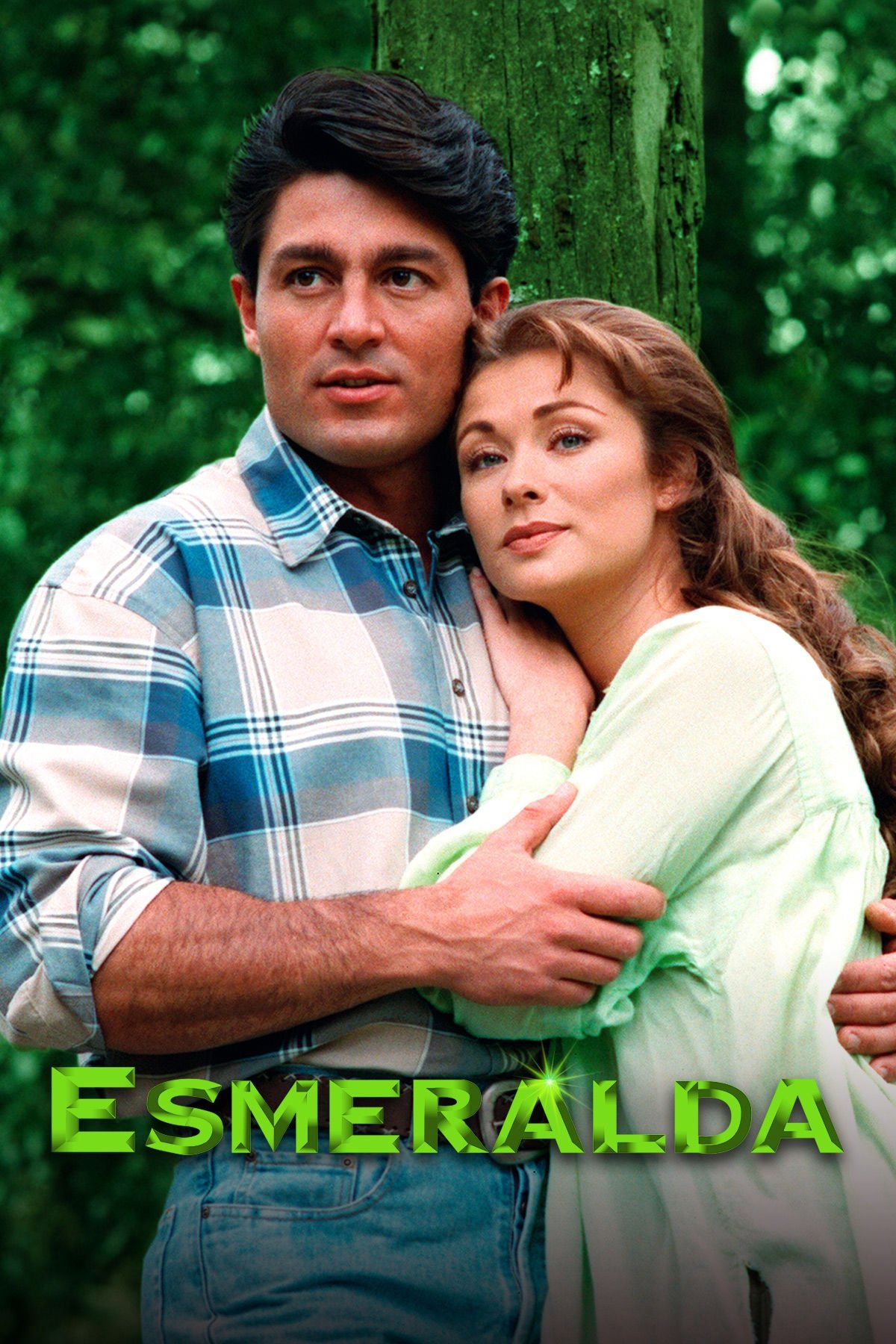
Esmeralda is a telenovela that was released by Televisa in 1997. It is a remake of a 1970 Venezuelan telenovela of that same name, and was itself remade in Brazil in 2004. Another version is Topacio from Venezuela in 1984. One of the most famous telenovela all the time.
A telenovela that dramatizes the romances and rivalries between two brothers and two sisters in Mexico between the years 1885 and 1900.
¡Válgame Dios! is a Spanish-language Venezuelan telenovela written by Mónica Montañéz for Venevisión. Sabrina Seara and Eduardo Orozco star as the main protagonists while Ricardo Alamo, Carlota Sosa and Raquel Yanez star as the main antagonists.
Fernando Lascurain is a wealthy businessman and recent widower, attempting to raise his seven unruly children. He seeks the assistance of a new nanny. He hires and falls in love with Ana Leal, a struggling exotic dancer who tries to hide her double life. Although Ana lacks experience and a refined education, she quickly bonds with the Lascurain children. Ana dreams of being a mother, but when her home is destroyed following an accident, she must borrow money from her ruthless boss at "Chicago", the night club where she is secretly employed. When Fernando simultaneously falls for Ana and Isabela, an economist and sophisticated woman who is trained by her mother to marry a millionaire, he must choose between both women.
Leticia Padilla Solís, “Leti”, is an intelligent but unattractive girl, rather ugly. She graduated with honors in economics, speaks several languages, is fluent in computers, and is a financial genius. Only, because of his physique, she can't find work. Desperate to find a job, “Lety” decides to accept being hired below her level and takes a job as a secretary at Conceptos, a famous video production company, where ugliness is taboo. The production company “Conceptos” was founded by two good friends: Don Humberto Mendiola, and Julián Villaroel. Unfortunately, shortly after, the Villaroels die in an accident and Don Humberto and his wife Teresita take care of the Villaroels' orphaned children: Ariel, Marcia and Ana Leticia and the successful company.
Café con aroma de mujer is a 1994 Colombian telenovela, produced by then programming company RCN TV on state-owned Canal A. It was written and created by Fernando Gaitán. It was broadcast in several countries throughout Latin America, North America and Europe.
La Mujer Del Vendaval is a 2012 Mexican telenovela produced by Mapat L. de Zatarain for Televisa. It is a remake of the Venezuelan telenovela Un Esposo para Estela. Ariadne Díaz and José Ron star as the main protagonists, while Chantal Andere, Marco Muñoz, Manuel Flaco Ibañez and Florencia del Saracho as the main antagonists.
Sueños y Caramelos is a 2005 Mexican telenovela that starred Nashla Aguilar as a little girl who lives in an almacen where she assembles a Maniqui or Mannequin, which comes to life and becomes like a mother to her. Remake of La Pícara Soñadora
Story of love between Marimar and Sergio. Sergio is from a wealthy family, and Marimar lives with her poor grandparents in a hut in front of the ocean.
Piel de otoño is a Mexican telenovela that was produced by Televisa and broadcast on El Canal de las Estrellas in Mexico from 9 May 2005 through 23 September 2005 in Mexico, and from October 10, 2005, through February 17, 2005, in the United States. Starring Laura Flores and René Strickler as the series' protagonists, the show tells the story of Lucía Villarreal de Mendoza, a woman who seeks refuge from her husband and children's abuses in the friendship of a stranger on the Internet, who signs his messages only as "wind". Piel de otoño is a remake of the 1986 Televisa telenovela Cicatrices del alma. The program aired weekdays at 5 pm for twenty weeks.
Rubí Pérez is a very beautiful but poor woman who studies at an exclusive university thanks to the financial support from Cristina , her hard-working older sister. She is best friends with Maribel de la Fuente , a kind and wealthy young woman. Rubí is actually jealous of Maribel's social status while pitying her disability and dreams of marrying a rich man to leave poverty behind.
Palabra De Mujer is a telenovela remake of El Amor Tiene Cara De Mujer was made by Televisa, starring Edith González, Yadhira Carrillo, Ludwika Paleta, and Lidia Ávila. The telenovela, a production of José Alberto Castro, premiered October 22, 2007 and ended on May 9, 2008 in El Canal de las Estrellas.
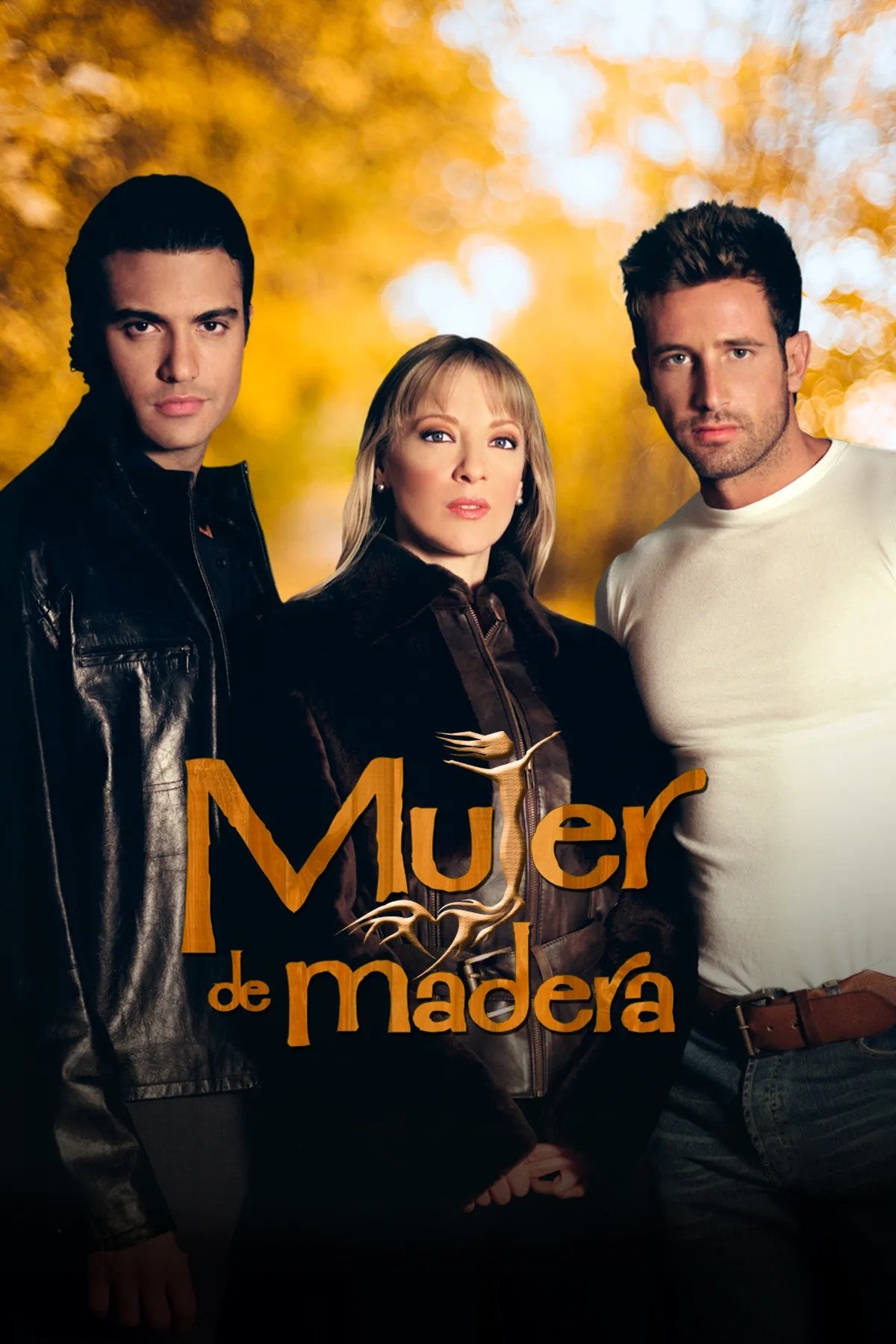
Mujer de Madera is a Mexican telenovela produced by Televisa in 2004. One unusual feature of this telenovela is that the main character is played by different actresses before and after her stay in hospital due to a forest fire.