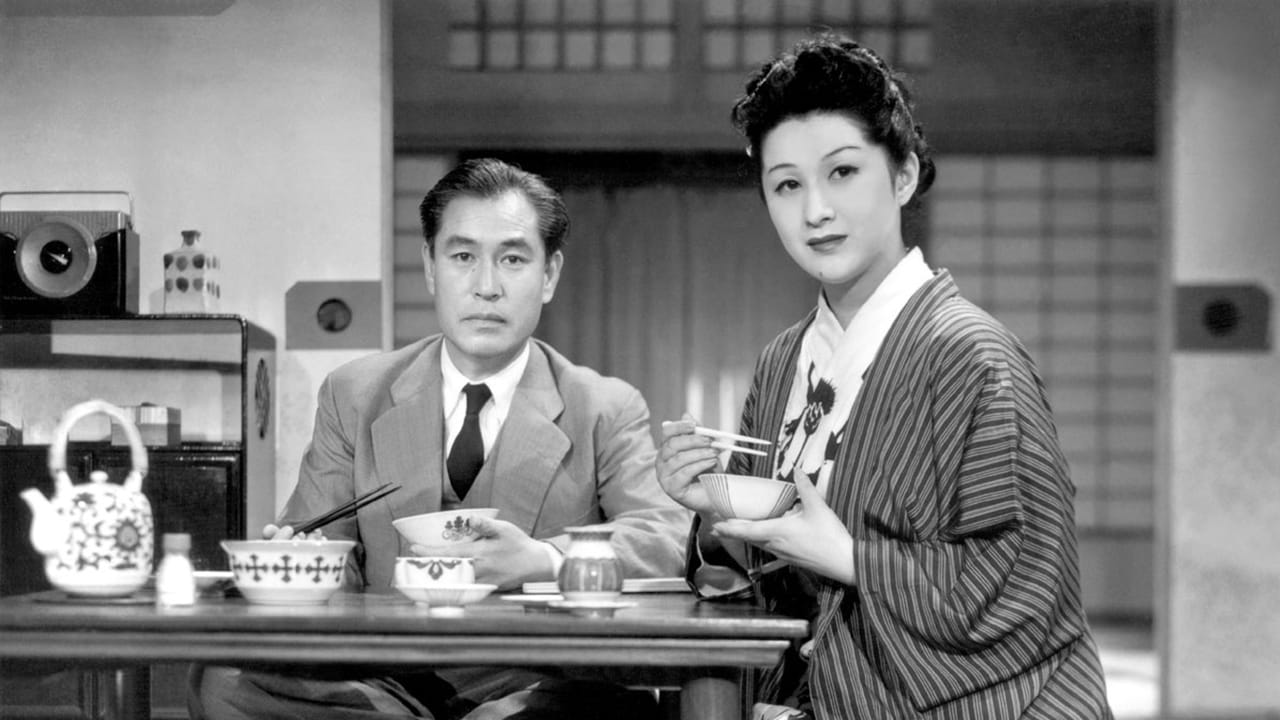
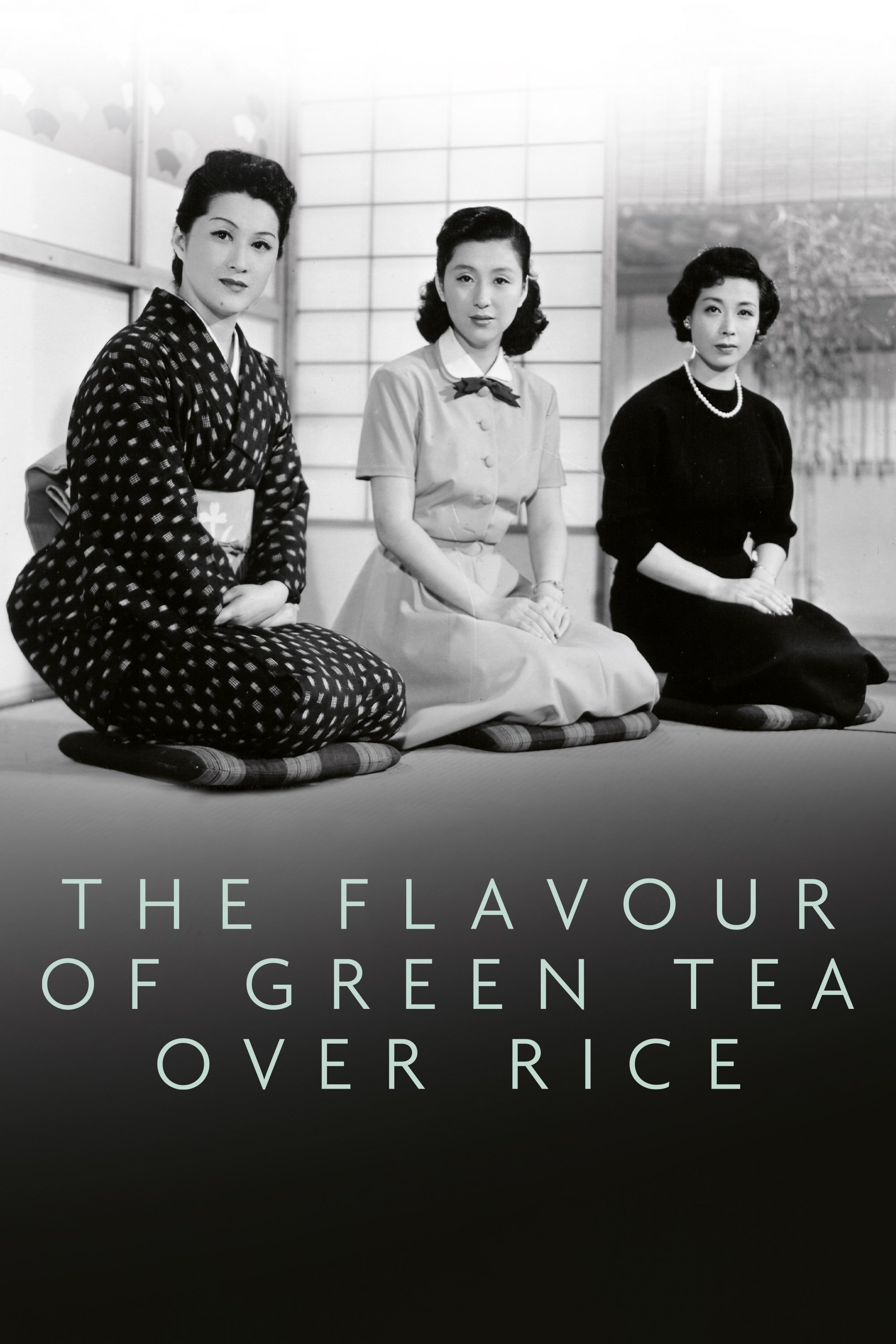


The arranged marriage between a capricious woman from Tokyo high society and a quiet rustic man is tested by a marital crisis.
Social & External
The people behind it
Shin Saburi
Mokichi Satake
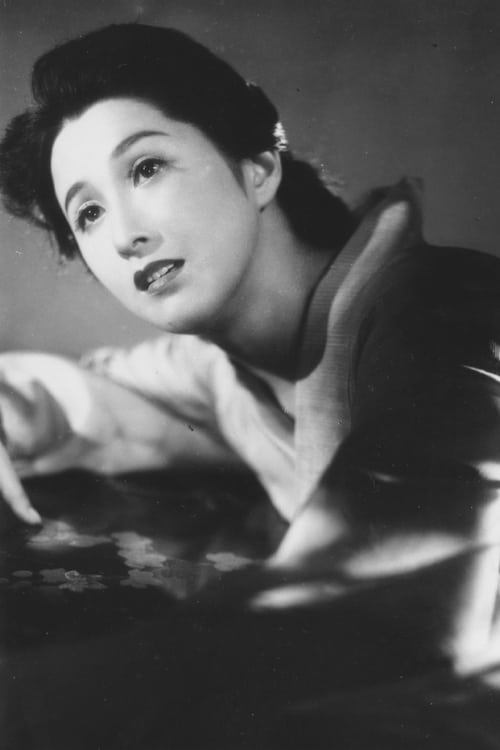
Michiyo Kogure
Taeko Satake
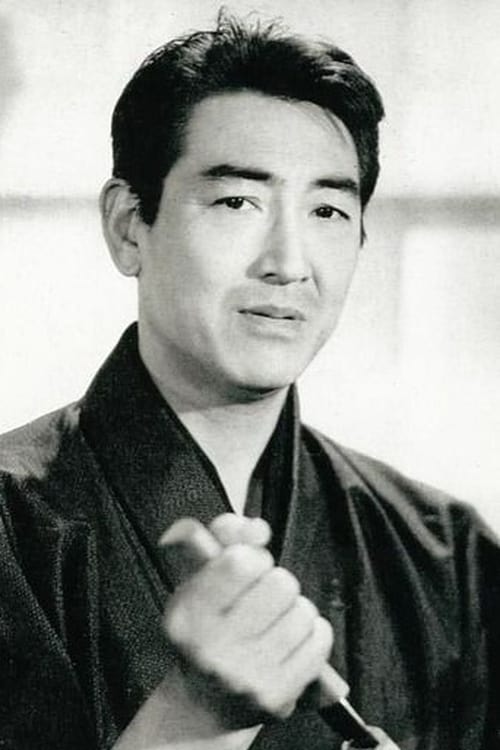
Koji Tsuruta
Noboru Okada

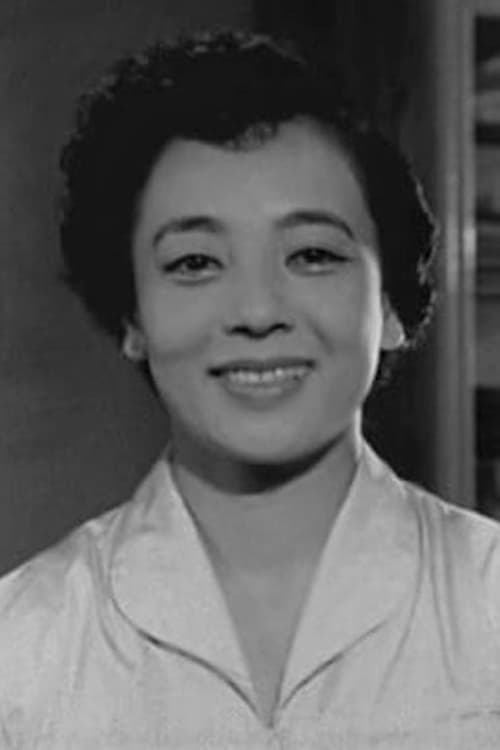
Chikage Awashima

Aya Amamiya
Keiko Tsushima
Setsuko Yamauchi
Eijirō Yanagi
Yamauchi
Kuniko Miyake
Chizu Yamauchi
Kōji Shitara
Koji Yamauchi
Chishū Ryū
Sadao Hirayama
Yūko Mochizuki
Shige
A sendup of the stereotypical Japanese family: dad is a salaryman jerk, unable to relate to anyone; mom is a hopeless housewife; the older son is a moderate academic success; but the younger son is a rebellious goof-off for whom a tutor must be hired. The tutor proceeds to blow the entire family apart.
A few days in the life of a quiet geisha, single mother of a smart young boy, in the lively Tokyo quarter of Ginza. A woman devoted to others' needs, she'll end by taking part herself in one of the many disguises of Ginza.
Following his great success with "North by Northwest," director Alfred Hitchcock makes a daring choice for his next project: an adaptation of Robert Bloch's novel "Psycho." When the studio refuses to back the picture, Hitchcock decides to pay for it himself in exchange for a percentage of the profits. His wife, Alma Reville, has serious reservations about the film but supports him nonetheless. Still, the production strains the couple's marriage.
War widow Reiko rebuilds and runs the grocery shop in the house of her husband's family. Many years later, their business is threatened by a newly built supermarket and Reiko's in-laws plan to convert their small shop into a supermarket, to her detriment.
Arindam, a matinee idol, is going by train to collect an acting award. On the train, he is confronted by Aditi, a journalist who somewhat unwillingly starts to take his interview. Arindam, won over by Aditi's naivete, starts to disclose his past, his fears and his secrets.
An educated native of Mauritania tries to find work in Paris but encounters difficulty because of his race.
Yasuo (Hiroshi Abe) grew up as an orphan. He married a woman he loved and they had a son Akira (later played by Takumi Kitamura). Yasuo's life seemed great at the time, but his life totally changed after his wife died in accident. Since that time, Yasuo, who never experienced parents' love himself, has to raise his son Akira alone.
A teenage girl in Medieval England navigates life and tries to avoid the arranged marriages her father maps out for her.
Originally edited in two versions. Version I, 70 minutes; version II, 90 minutes. (The only known existing version is not Markopoulos’s edit and contains additional titles, music and voice-over added later than 1961. 65 minutes.) Filmed in Mytilene and Annavysos, Greece, 1958. Existing copy on video, J. and M. Paris Films, Athens.
Marigold Grand Opening Wars 2024 ~ Day 1 (Afternoon) was a professional wrestling event promoted by Dream Star★Fighting Marigold. It took place on May 26, 2024, at Shin-Kiba 1st RING in Tokyo, Japan.
A reporter doing a story on taxidermy discovers an odd older couple that he becomes convinced are ex-Nazi's. The chief item leading to this belief is an odd puppet theater the couple operate in their basement that re-creates the Nazi era using stuffed creatures.
In April 1941, months before the Pacific War begins, Japan’s brightest young elites, bureaucrats, military officers, and civilians, are secretly assembled at the Total War Research Institute. Tasked with simulating a conflict against the United States, they confront harsh realities through intense analysis.
Sayuri Namba's Dream Come True Special was a professional wrestling event promoted by Tokyo Joshi Pro-Wrestling, held on June 14, 2025 at Shin-Kiba 1st RING in Tokyo, Japan.
A young academy soldier, Maciek Chelmicki, is ordered to shoot the secretary of the KW PPR. A coincidence causes him to kill someone else. Meeting face to face with his victim, he gets a shock. He faces the necessity of repeating the assassination. He meets Krystyna, a girl working as a barmaid in the restaurant of the "Monopol" hotel. His affection for her makes him even more aware of the senselessness of killing at the end of the war. Loyalty to the oath he took, and thus the obligation to obey the order, tips the scales.
Martinaud, an illustrious notary suspected of being the perpetrator of two horrendous crimes, voluntarily agrees to be questioned by Inspector Gallien on New Year's Eve. What initially is a routine procedure, soon becomes a harsh interrogation that seems to confirm the initial suspicions.
Evan, a musically gifted orphan, runs away from his orphanage and searches New York City for his birth parents. On his journey, he's taken under the wing of the Wizard, a homeless man who lives in an abandoned theater. After discovering his talent, the Wizard gives Evan the name "August Rush" and devises a plan to profit from his talent. Little does Evan know that his parents, Lyla and Louis, are searching for him too.
Unemployed Antonio is elated when he finally finds work hanging posters around war-torn Rome. However on his first day, his bicycle—essential to his work—gets stolen. His job is doomed unless he can find the thief. With the help of his son, Antonio combs the city, becoming desperate for justice.
Claudia and Anna join Anna's lover, Sandro, on a boat trip to a remote volcanic island. When Anna goes missing, a search is launched. In the meantime, Sandro and Claudia become involved in a romance despite Anna's disappearance, though the relationship suffers from guilt and tension.
When her husband goes missing at the beach, a female professor begins to mentally disintegrate as her denial of his disappearance becomes delusional.
In 1977, an idealistic porn producer and his promising protege try to catch up with the end of an era before their never-ending party collides with cold, hard reality.
Widower Shuhei Hirayama's caretaker is his 24-year-old daughter, Michiko. Gradually, he comes to realize that Michiko should not be obliged to look after him for the rest of his life, so he arranges a marriage for her.
In postwar Tokyo, Noriko lives with her extended family. Although she enjoys her career and her social life, her more traditional family worries about her single marital status at the advanced age of 28. 40-year-old business associate Takako proposes, Noriko's family press her into accepting, but when her widowed childhood friend Kenkichi returns to the neighborhood, she finds her heart leading in another direction.
Noriko is perfectly happy living at home with her widowed father, Shukichi, and has no plans to marry -- that is, until her aunt Masa convinces Shukichi that unless he marries off his 27-year-old daughter soon, she will likely remain alone for the rest of her life. When Noriko resists Masa's matchmaking, Shukichi is forced to deceive his daughter and sacrifice his own happiness to do what he believes is right.
Japan, 1943, during World War II. Young Suzu leaves her village near Hiroshima to marry and live with her in-laws in Kure, a military harbor. Her creativity to overcome deprivation quickly makes her indispensable at home. Inhabited by an ancestral wisdom, Suzu impregnates the simple gestures of everyday life with poetry and beauty. The many hardships, the loss of loved ones, the frequent air raids of the enemy, nothing alters her enthusiasm…
Ryota is an unpopular writer although he won a literary award 15 years ago. Now, Ryota works as a private detective. He is divorced from his ex-wife Kyoko and he has an 11-year-old son Shingo. His mother Yoshiko lives alone at her apartment. One day, Ryota, his ex-wife Kyoko, and son Shingo gather at Yoshiko's apartment. A typhoon passes and the family must stay there all night long.
In a small Tokyo apartment, twelve-year-old Akira must care for his younger siblings after their mother leaves them and shows no sign of returning.
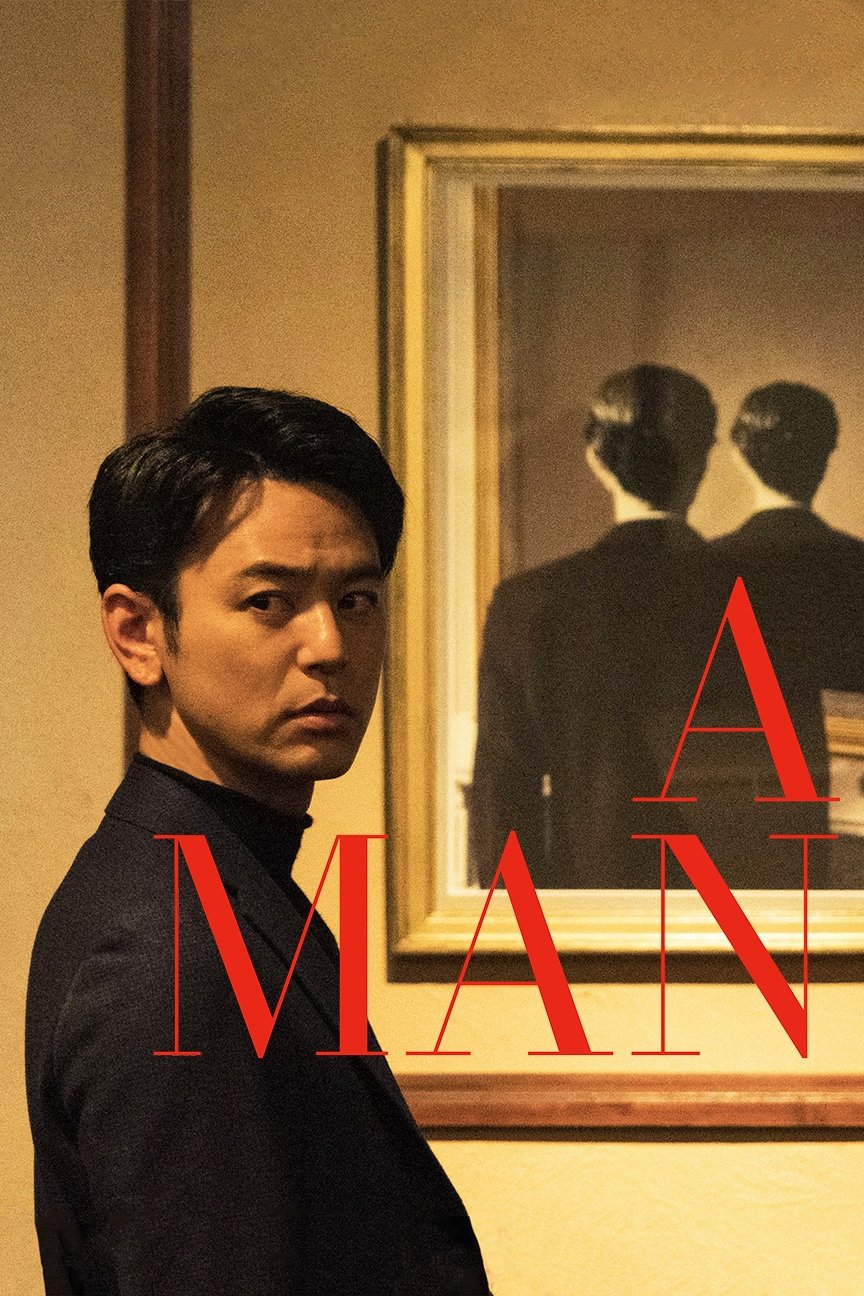
Akira works as a lawyer. One day, he meets with his former client Rie, who asks Akira to perform a background check on her late husband Daisuke.
After being diagnosed with a terminal illness, Futaba resolves to spend her remaining time reuniting her broken family, reopening the long-closed bathhouse, and helping her shy daughter Azumi learn to stand on her own.
A woman, Tome, is born to a lower class family in Japan in 1918. The title refers to an insect, repeating its mistakes, as in an infinite circle. Imamura, with this metaphor, introduces the life of Tome, who keeps trying to change her poor life.
Four women in their thirties reevaluate their relationships, both shared and private, after a startling revelation concerning one's marriage forces each of them to ask one of life's biggest questions: "Am I who I want to be?"
The elderly Shukishi and his wife, Tomi, take the long journey from their small seaside village to visit their adult children in Tokyo. Their elder son, Koichi, a doctor, and their daughter, Shige, a hairdresser, don't have much time to spend with their aged parents, and so it falls to Noriko, the widow of their younger son who was killed in the war, to keep her in-laws company.
In Japan's Aokigahara Forest, a troubled teacher meets a mysterious lost stranger who takes him on a life-changing journey of love and redemption.
Narumi is on bad terms with her husband, Shinji, when, one day, Shinji goes missing. He comes back a couple of days later, but he seems like a totally different person, and he is now gentle and tender. He goes for a walk every day. Meanwhile, journalist Sakurai covers the story of a family that was brutally murdered, when an unexplained phenomenon takes place.
Takumi and his daughter Hana live in Mizubiki Village, close to Tokyo. One day, the village inhabitants become aware of a plan to build a camping site near Takumi's house offering city residents a comfortable "escape" to nature.
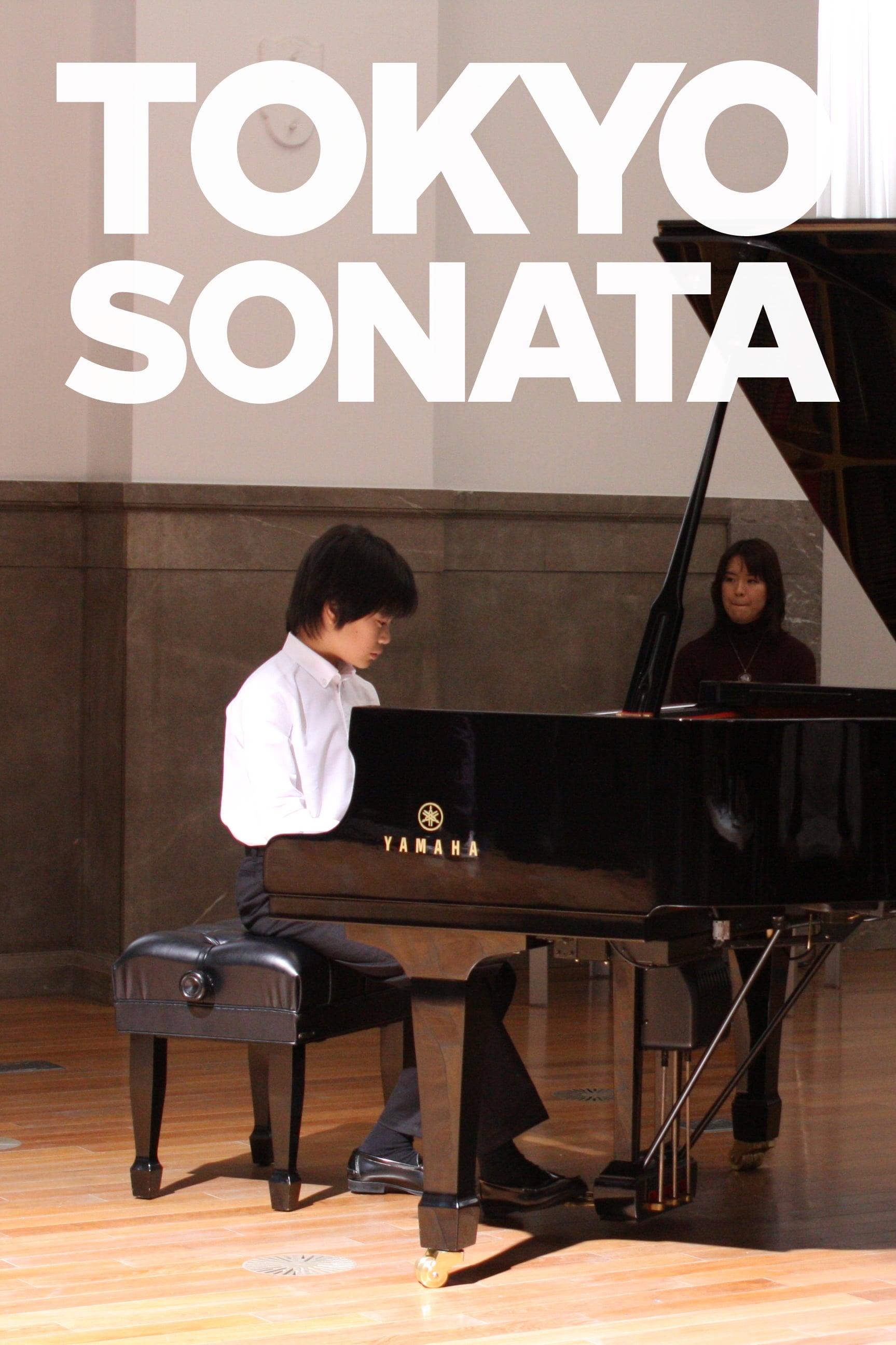
The winds of change blow as a family grapples with unemployment, alienation, mistrust and a lack of communication. When a Japanese salaryman loses his job to outsourcing to China, it's simply the beginning of a series of shattering incidents, leading to the implosion of the family unit.
Shuhei is leading a tough life. His alcoholic mother Akiko can only hook up with bad guys and order Shuhei to go get money from his disapproving grandparents instead of going to school. Except raising the little half-sister, his rock-bottom life seems to have no end.
Yokohama, 1963. Japan is picking itself up from the devastation of World War II and preparing to host the 1964 Olympics—and the mood is one of both optimism and conflict as the young generation struggles to throw off the shackles of a troubled past. Against this backdrop of hope and change, a friendship begins to blossom between high school students Umi and Shun—but a buried secret from their past emerges to cast a shadow on the future and pull them apart.
Residents of a rundown boardinghouse in 19th-century Japan, including a mysterious old man and an aging actor, get drawn into a love triangle that turns violent. When amoral thief Sutekichi breaks off his affair with landlady Osugi to romance her younger sister, Okayo, Osugi extracts her revenge by revealing her infidelity to her jealous husband.
An elderly Nagasaki hibakusha spends a summer caring for her four grandchildren, whose curiosity about the 1945 bombing stirs buried memories and moral questions. When an American nephew from Hawaii visits, the family confronts grief, guilt, and the possibility of reconciliation across generations.
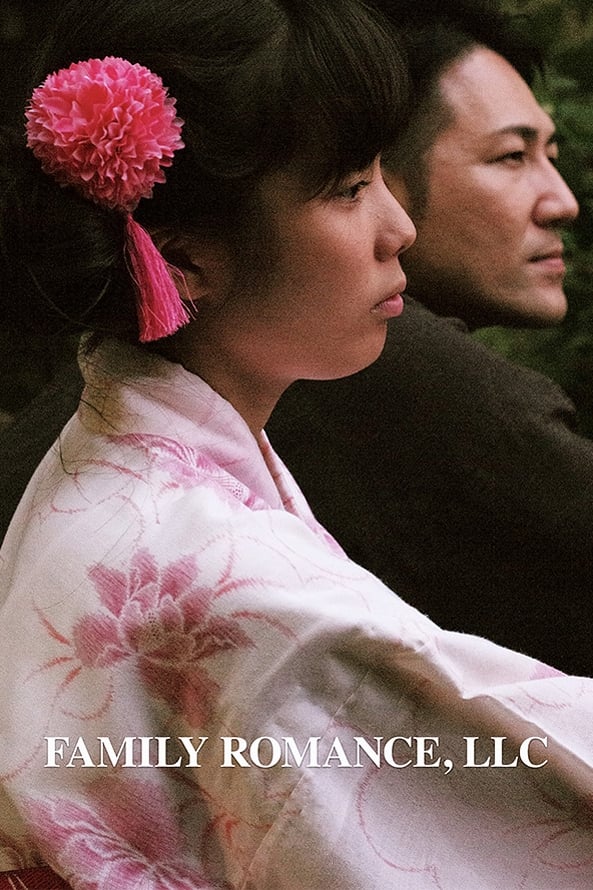
A hard-working mother inches towards disaster as she divorces her husband and starts a successful restaurant business to support her spoiled daughter.