
An obsessive exploration of the three geometric dimensions in hopes of reaching a fourth.
Social & External
Unknown Role
Filmed by Jonas Mekas from the 44th floor of the Time-Life Building, “Empire” explores the passage of time without the use of characters or a traditional narrative. The film, that consists of one stationary shot of the Empire State Building, was made from standard 1,200-foot rolls of 16mm film with a more than eight-hour runtime.
A short film spelling Tokyo in hiragana.
‘Under the Weight of a Waking Dream’ is Zefier's debut swan song to the ending year. Comprised of poetry and endless enumerations is a diaristic film chronicling the lessons and contradictions found throughout the human experience.
In 1961 Lithuanian American artist and impresario George Maciunas established the avant-garde art movement Fluxus. George details the rise of Fluxus following a sensationalized tour of “concerts” in Europe in 1962, and continuing in New York for most of the 1960s and ’70s. During this time Maciunas was converting the dying industrial buildings of Soho into a network of artists’ lofts, creating one of the first official real estate co-ops of artist-owned buildings. Maciunas’s life and legacy—as recounted by artists of his generation, including Yoko Ono and Jonas Mekas—ignited debates that remain pivotal to artists working today.
Ten years after the death of iconic French filmmaker, Chris Marker. A filmmaker, hoping to rediscover that unique sensibility against the uncertainty of the new century, returns to the places synonymous with those incomparable and unforgettable films-- From the cat cemetery of Sans Soleil, to the mausoleum of The Last Bolshevik; The caves of Level Five to the rooftops of The Case of the Grinning Cat. A biographical portrait of one of the 20th century's greatest and most misunderstood filmmakers.
In 1965 actor and hopeful first time director Titus Moede befriended ‘Preacher’ of the outlaw motorcycle club the Coffin Cheaters while looking for a project. He soon realized that this was exactly the subject he had been looking for.
A psychedelic odyssey into the fabric of the universe, guided by a filmmaker’s immersive practical experiments that transcend into a deeply hypnotic audio-visual experience of awe and human connection to the natural world.
Shot in Florence, the film draws on Leonardo da Vinci’s notebooks and Paul Valéry’s essay on da Vinci’s creative process to explore parallels between Renaissance space and the moving image. Beavers employs rapid pans and tilts along the city’s facades, interspersed with glimpses of his own face, linking camera movement to the filmmaker’s investigative gaze. The work marks a turning point in his practice, foregrounding presence and perception as central to his method. (Note: The film was re-edited and re-released in 1999.)
The film "Nights full moon" shows the tendency of moral decay in society. The main character is torn apart by internal contradictions, leading him to the path of Evil. Bans on self-identification - philosophical, existential, sexual, and then permissiveness spawn a monster that is not aware of its true nature and genuine desires. Throughout the film-trilogy, the protagonist goes through a series of temptations that ruin his soul and lead, after all, to a madhouse. In a general sense, the film allegorically shows the tragic path of the Russian lumpen intellectual, lost between the past and the present, not finding the strength to accept and comprehend the unexpected changes that happened in our country twenty years ago. In the global sense - the tragic circle of Russian history.
Elvis Mitchell uncovers why Chameleon Street (1989) by Wendell B. Harris Jr. failed to secure a proper distributor deal. Originally aired as a segment on "20/20".
An experience of a camera swinging in different gestures facing the optical distortion of the Sun. The last appearance of the smudge.
This episode focuses on Zappa's early 70s albums, Overnight Sensation (1973) and Apostrophy (') (1974). Together they encapsulate Zappa's extraordinary musical diversity and were also the 2 most commercially successful albums that he released in his prolific career. Included are interviews, musical demonstrations, rare archive & home movie footage, plus live performances to tell the story behind the conception and recording of these groundbreaking albums. Extras include additional interviews and demonstrations not included in the broadcast version, 2 full performances from the Roxy in 1973 and Saturday Night Live in 1976, and new full live performance done specially for these Classic Albums.
Departing from peripheral details of some paintings of the Bilbao Fine Arts Museum, a female narrator unravels several stories related to the economic, social and psychological conditions of past and current artists.
A colorful collage, with a subtle ecology theme, made largely from footage from trial runs of programs used for many of the other films.
Seemingly at random, the wings and other bits of moths and insects move rapidly across the screen. Most are brown or sepia; up close, we can see patterns within wings, similar to the veins in a leaf. Sometimes the images look like paper cutouts, like Matisse. Green objects occasionally appear. Most wings are translucent. The technique makes them appear to be stuck directly to the film.
After the title, a white screen gives way to a series of frames suggestive of abstract art, usually with one or two colors dominating and rapid change in the images. Two figures emerge from this jungle of color: the first, a shirtless man, appears twice, coming into focus, then disappearing behind the bursts and patterns of color, then reappearing; the second figure appears later, in the right foreground. This figure suggests someone older, someone of substance. The myth? Preserved by the Academy Film Archive in 2012.
The first part depicts the heroine's toothache consequent to the loss of a very valuable watermelon, her dentistry and transportation to heaven. Next follows an elaborate exposition of the heavenly land, in terms of Israel and Montreal. The second part depicts the return to Earth from being eaten by Max Müller on the day Edward VII dedicated the Great Sewer of London.
Corroded pixels struggle to form an image as they move through Cold War promises of development in rural Thailand, haunted by archival voices.
[Here] Pollet made a work that is the very definition of what French critics like to call an ovni or ufo (as in ‘unidentified filmic object’). [It] has been described as being ‘like a comet in the sky of French cinema,’ an ‘unknown masterpiece,’ and an ‘unprecedented’ work that refuses interpretation even as it has provoked reams of critical writing. Its rhythmic collage of images – a girl on a gurney, a fisherman, Greek ruins, a Sicilian garden, a Spanish corrida – is accompanied by an abstract commentary written by Sollers, and only the somber lyricism of Antoine Duhamel’s score holds the film’s elements together. At first viewing, you fear that [it] might fly apart into incoherent fragments. Instead, over the course of its 45 minutes it invents its own rules, and you realize you’re watching something like the filmic channeling of an ancient ritual.
Experience these masterpieces of storytelling from the creative minds that brought you Toy Story, Monsters, Inc., Finding Nemo and many more. With revolutionary animation, unforgettable music and characters you love, these dazzling short films have changed the face of animation and entertainment and are sure to delight people of all ages for years to come.
Short film to a song of love lost and rediscovered, a woman sees and undergoes surreal transformations. Her lover's face melts off, she dons a dress from the shadow of a bell and becomes a dandelion, ants crawl out of a hand and become Frenchmen riding bicycles. Not to mention the turtles with faces on their backs that collide to form a ballerina, or the bizarre baseball game.
Cobb, Arthur and Nash are enlisted by Cobol Engineering.
After years of toiling away inside the engine room of a towering locomotive, two antiquated robots will risk everything for freedom and for each other.
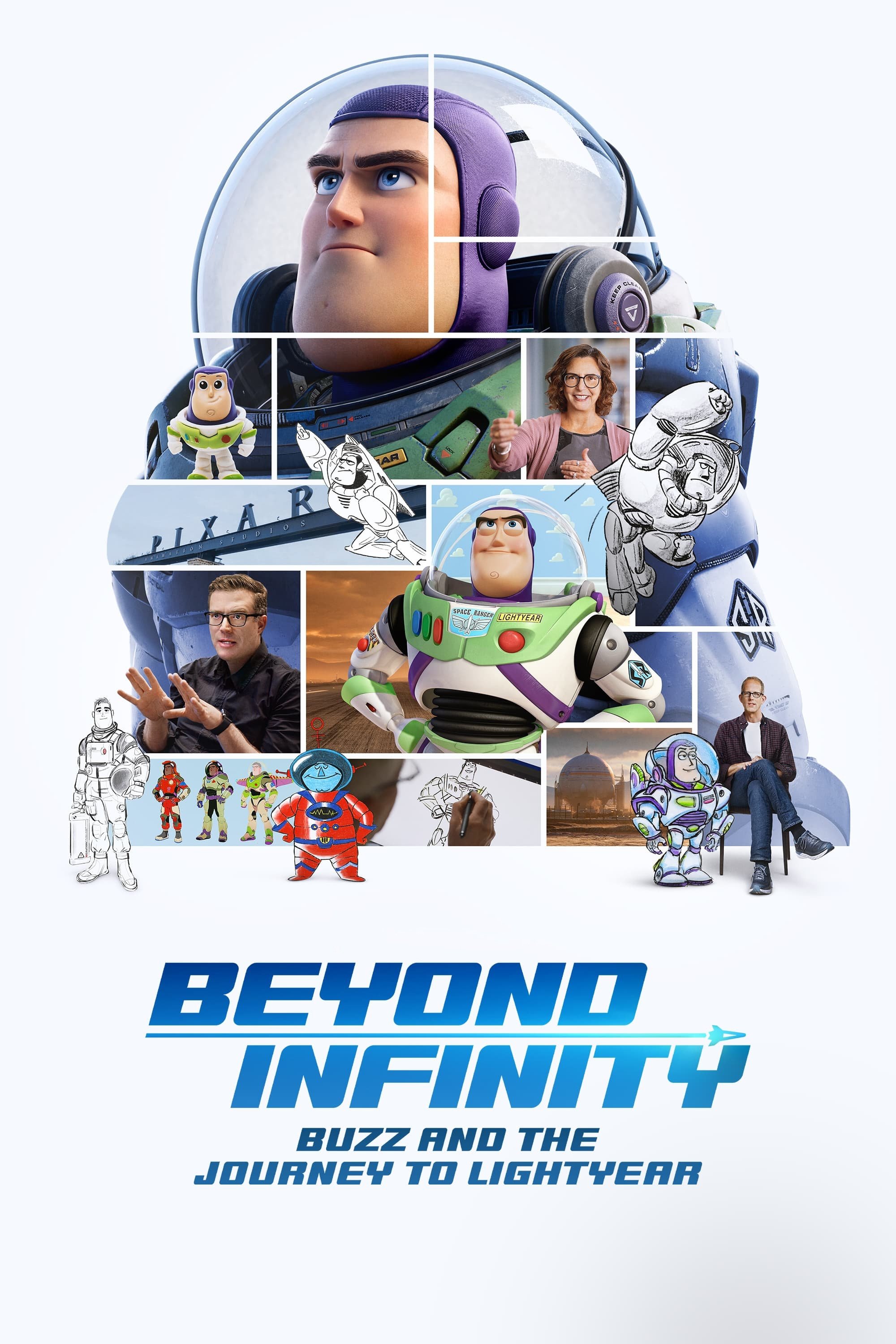
Explore the evolution of Buzz Lightyear from toy to human in the making of Pixar’s Lightyear. Dive into the origin and cultural impact of everyone’s favorite Space Ranger, the art of designing a new “human Buzz,” and the challenges faced by the Lightyear crew along the way.
A grandmother is caught between her two favorite things when her granddaughter is unexpectedly dropped off during the day she was planning to spend watching her favorite TV show.
Young Vincent Malloy dreams of being just like Vincent Price and loses himself in macabre daydreams that annoy his mother.
Following a tense encounter with a mysterious stranger with otherworldly powers, a man finds himself banished to a parallel, tyrannical Earth, where he fights to get back to the woman he loves.
A celebration of the universe, displaying the whole of time, from its start to its final collapse. This film examines all that occurred to prepare the world that stands before us now: science and spirit, birth and death, the grand cosmos and the minute life systems of our planet.

Ordered to teach a martial arts class of rambunctious bunny kittens, Po tells stories of each of the Furious Five's pasts.
After a hurricane levels his city, a young man wanders into a mysterious library where books literally come to life. This film won the Oscar for Best Animated Short Film in 2012.
An animated short film produced by Pixar included as a bonus on the DVD edition of the 2004 feature film "The Incredibles."
A wooden puppet who desperately wants to fit in makes an ill-fated wish upon a star, sparking a journey of self-discovery.
Capturing Avatar is a feature length behind-the-scenes documentary about the making of Avatar. It uses footage from the film's development, as well as stock footage from as far back as the production of Titanic in 1995. Also included are numerous interviews with cast, artists, and other crew members. The documentary was released as a bonus feature on the extended collector's edition of Avatar.
A look at the first years of Pixar Animation Studios - from the success of "Toy Story" and Pixar's promotion of talented people, to the building of its East Bay campus, the company's relationship with Disney, and its remarkable initial string of eight hits. The contributions of John Lasseter, Ed Catmull and Steve Jobs are profiled. The decline of two-dimensional animation is chronicled as three-dimensional animation rises. Hard work and creativity seem to share the screen in equal proportions.


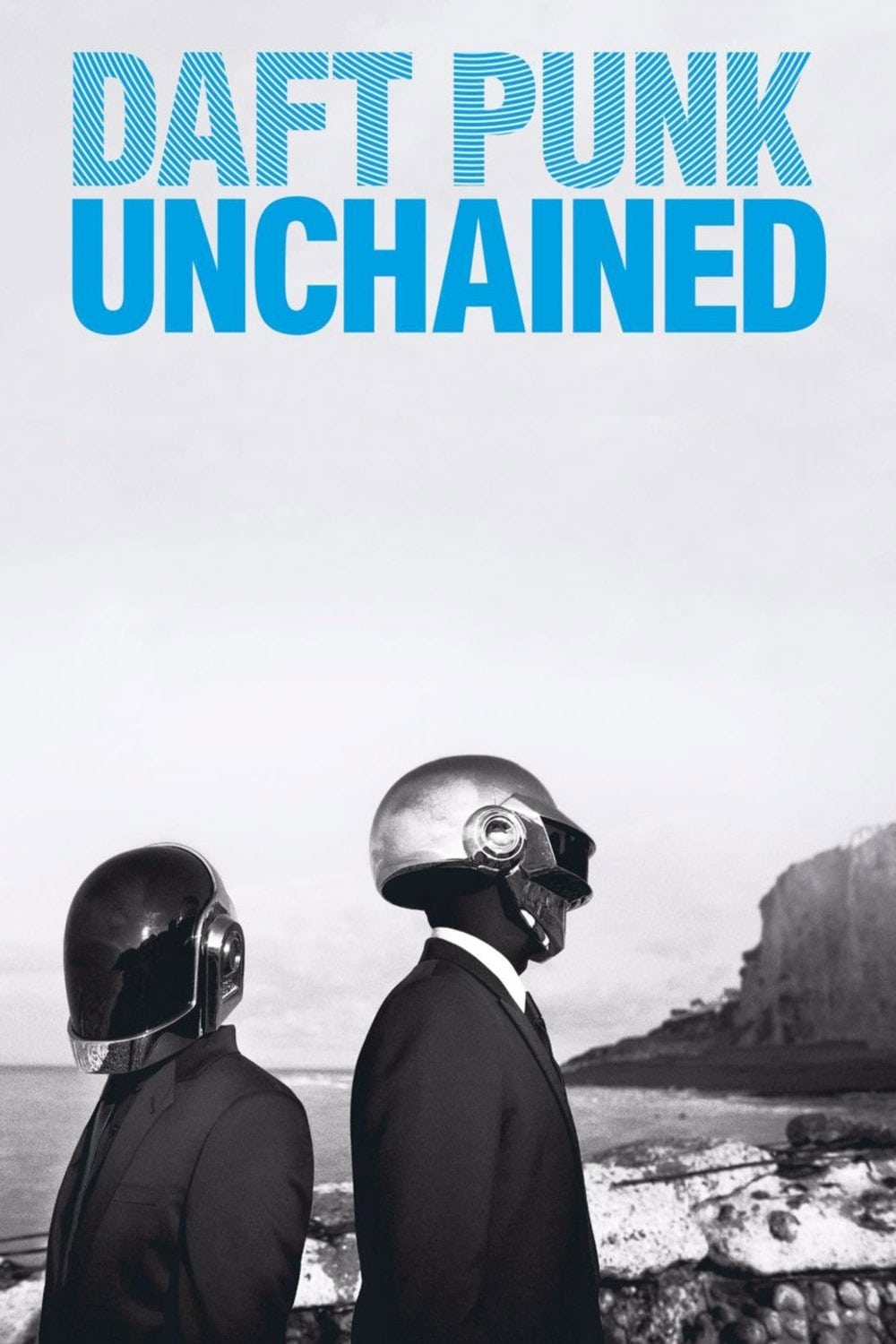
Daft Punk Unchained is the first film about the pop culture phenomenon that is Daft Punk, the duo with 12 million albums sold worldwide and seven Grammy Awards. Throughout their career Thomas Bangalter and Guy-Manuel de Homem-Christo have always resisted compromise and the established codes of show business. They have remained determined to maintain control of every link in the chain of their creative process. In the era of globalisation and social networks, they rarely speak in public and neither do they show their faces on TV. This documentary explores this unprecedented cultural revolution revealing a duo of artists on a permanent quest for creativity, independence and freedom.
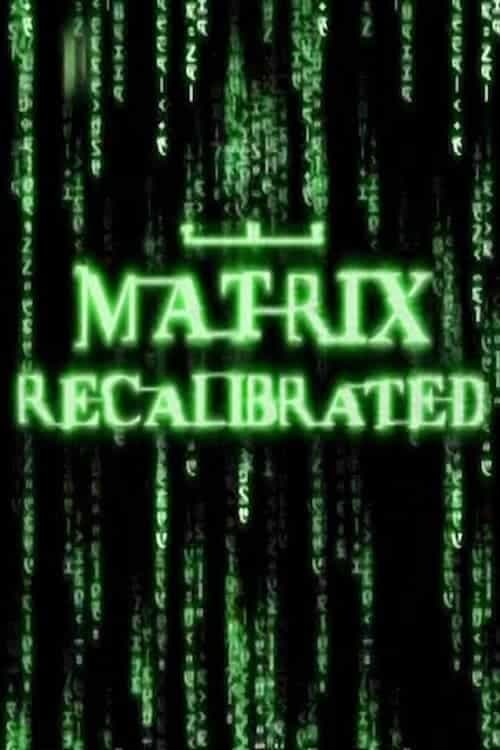
The making of Matrix Revolutions, The (2003) is briefly touched on here in this documentary. Interviews with various cast and crew members inform us how they were affected by the deaths of Gloria Foster and Aaliyah, and also delve into the making of the visual effects that takes up a lot of screen time. Written by Rhyl Donnelly
Three sleepy babies in a clog-boat sailing through the night sky attempt to fish with candy canes for very smart fish.
A mother bird tries to teach her little one how to find food by herself. In the process, she encounters a traumatic experience that she must overcome in order to survive.
Martin Scorsese, Robert De Niro, Joe Pesci, and Al Pacino in conversation about The Irishman.